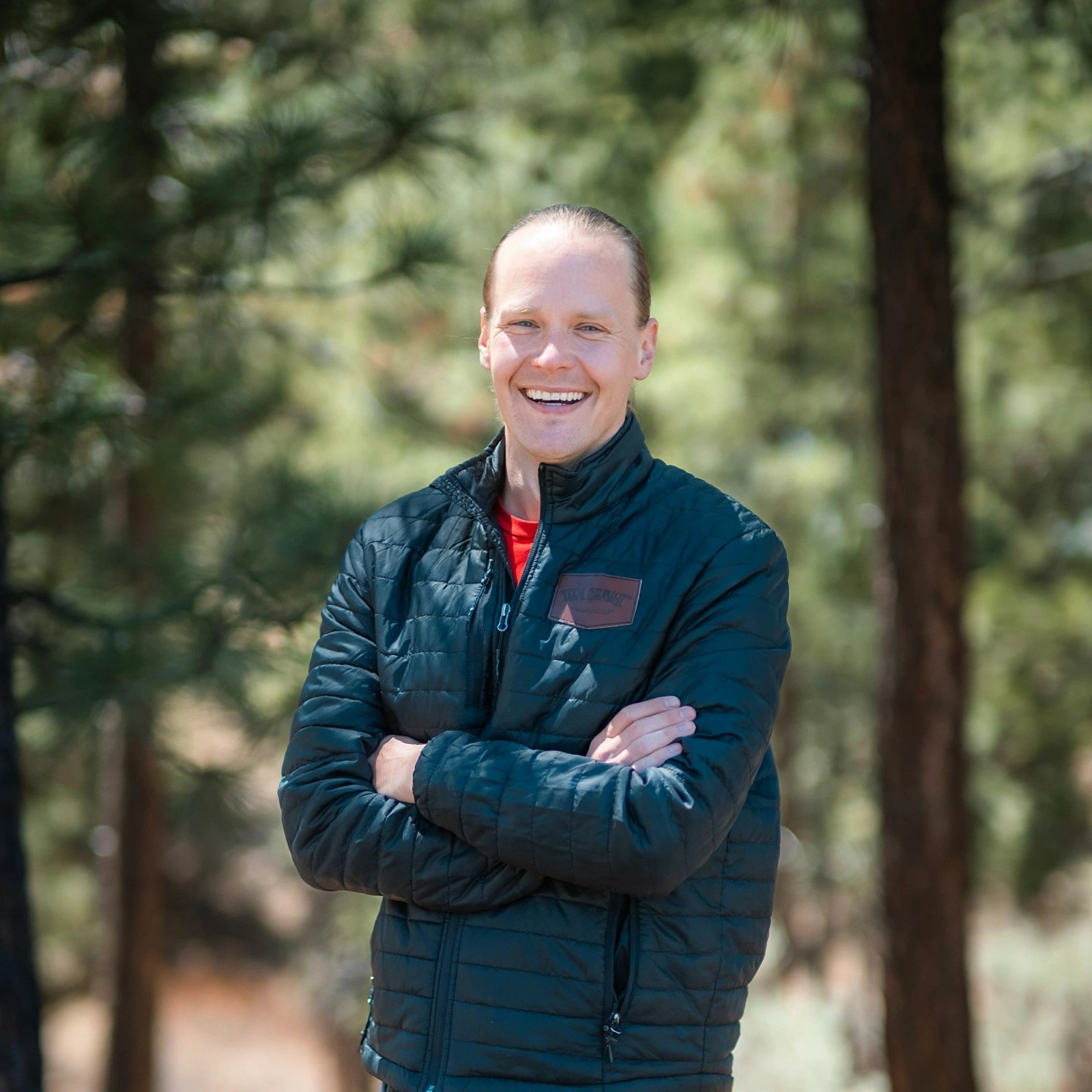
“I am not angry at coffee, just let down by it, so I formulated something better.” The line sounds like branding, but it reads as dosing logic once Heath explains his own slow caffeine metabolism.
Shane Heath used to take in five or six caffeinated drinks daily, then began bringing a 32 ounce hydro flask of cacao, chai and mushrooms to his job and to jiu jitsu. In May 2018 he bought jars, made a site and started MUDWTR to rebuild the morning ritual, one lot and label at a time.
In May of 2018, Shane Heath bought jars and labels, built a website and started MUDWTR from Venice and Santa Monica, California. He carried 15,000 dollars of debt and held a full time design role at tech startups.
He was raised in Santa Cruz, California. He consumed over one thousand milligrams of caffeine per day and felt the effect at work and at home, with anxious feeling, broken sleep and less space for creative work. He liked the aroma and taste of coffee, and the ceremony above all, but he sought a morning pattern that did more than deliver large caffeine loads.
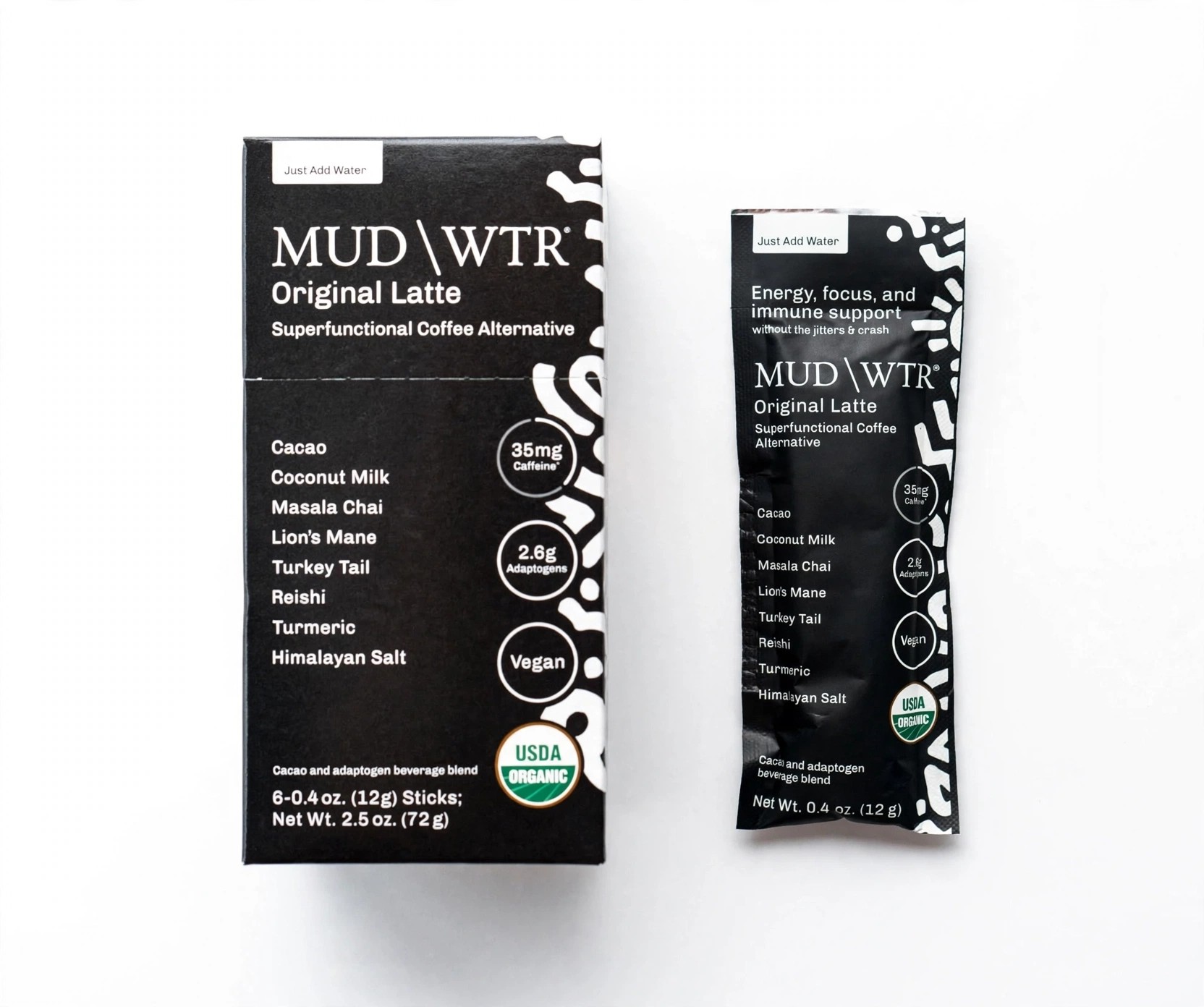
What started as a personal blend became a firm now staffed by a 32 person remote group. The first product was a cacao mix with masala chai and mushrooms, later followed by matcha and turmeric mixes, then protein. The company states each blend holds USDA Certified Organic status, with mushrooms cultivated in California, mixed and packed in the United States.
Pharmacology asks a narrower set of questions here. How much caffeine remains, which mushroom parts and extracts are used, what marker if any is standardized, and whether the trial cited used the same form and dose as the tin. This interview traces the powder in reverse, from cup to farm, drying and extraction, laboratory record and Supplement Facts panel, with credit where documentation exists and plain terms where data are thin.
We appreciate you sitting down to speak with us, Shane. Coworkers kept asking about the 32 ounce hydro flask you carried to work, jiu jitsu and painting sessions. What was inside that early mix, and how did decaf plus add ins turn into cacao, chai and mushrooms?
I built this drink around my own case. It came from personal testing to locate ingredients I trusted for my own need. I enjoy coffee. The aroma, the taste and most of all, I enjoy the ceremony. I likely drank five or six cups of coffee or another caffeinated drink each day and I paused to review my patterns and saw my coffee use was not producing usable energy.
When I began MUDWTR, I held 15,000 dollars in debt and kept a full time position. So in May of 2018, I started MUDWTR to help people reconsider their coffee use. At the start I prepared batches in a shared commercial kitchen, then we shifted to a contract manufacturer as volume rose. The day one message stayed plain. I am not angry at coffee, just underwhelmed by the data, so I formulated an alternative. That limit guided buying. Our products act in some respects as a lead domino or a Trojan horse. The beverage is the point of entry, but the sourcing behind it must bear weight.
You launched MUDWTR in May 2018 while carrying debt and working full time in design. What did that constraint teach you about raw material buying before brand design?
I adored the coffee ceremony, but I sought a morning pattern that did more than carry large caffeine doses. First I added items to decaffeinated coffee. Then I centered the formula on cacao and masala chai, with adaptogenic mushrooms and spices, among them lion’s mane and cordyceps. I transported it in a 32 ounce hydro flask during work, training and painting, and colleagues kept asking what filled my cup and whether I could prepare some for them.
My mother has been in the mushroom field since before my birth. She handled IT for one of the largest mushroom producers in North America, so I met that industry early. I did not train as a mycologist, but I learned whom to question. The company states every strain is selected for shown efficacy, and I describe lion’s mane for focus, cordyceps for energy and reishi for immunity as my frame for the group. That flask phase counted because it meant everyday intake, not theory. It needed to blend, taste acceptable and travel well.

Your flagship cacao formula sits beside a 100 percent organic matcha with naturally occurring L theanine and a zero caffeine turmeric with mushrooms and mycelium. How should a label reader separate those three by source and method?
Begin with geography and method. Our matcha formula is 100 percent organic, combined with spices and mushrooms, with only a fraction of coffee caffeine, plus naturally occurring L theanine. Matcha means shade cultivated tea, ground on stone, so source, picking and milling appear in color and feel. The cacao formula layers cacao with masala chai and mushrooms, among them chaga, reishi, lion’s mane and cordyceps with turmeric, so the panel lists more origins per tin.
The turmeric formula contains zero caffeine, with turmeric, spices, mushrooms and mycelium. Mycelium and fruiting body mark separate life stages of the organism, and shoppers often mix them up. Fermentation, drying and extraction set what becomes powder or oil prior to encapsulation or tin filling. Review the panel for which portion was used and whether an extract ratio or standardization appears. When absent, request it. The label starts the inquiry, it does not settle it.
Grown in California appears on your mushroom story, and your mother spent years in IT for one of North America’s largest mushroom growers. What does that origin establish, and what still needs a lab sheet?
My mother has been in the mushroom field since before my birth, so mushrooms felt ordinary at home long before market interest. That supplied a starting point and regard for cultivators. Now we state our mushrooms are cultivated in California. That source forms part of the label narrative, and it creates expectations for supervision, harvest logs and handling ahead of drying and milling.
What it establishes turns on records behind each lot. Grown in California names location. Alone it does not name fruiting body or mycelium share, extract ratio, standardization or assay outcome. For those points you need a third party certificate of analysis, showing identity, heavy metals and microbial counts linked to lot and batch. I suggest shoppers study the Supplement Facts panel and the other ingredients line, then ask for lot documents. Geography counts, then laboratory work verifies what exited the farm and entered encapsulation and fill.
You call the line a lead domino or Trojan horse for healthy minds through healthy habits, and the rise line passed 130 million servings by 2023. How do you anchor that habit claim to extraction and testing at scale?
Our products function in some ways as a lead domino or a Trojan horse. The sentence we repeat is create healthy minds through healthy habits. The drink opens the morning in another way, with lower caffeine and a stable ceremony, and later hours follow. By 2023 we had moved more than 130 million servings of the flagship rise Cacao blend, and in 2022 we moved about 1.4 million units to about 443,000 customers in the past 12 months.
Scale complicates traceability, it does not simplify it. I blended those early lots myself in a commercial kitchen. Afterward we shifted to a co packer, with blending and packaging in the US. So I stress the unglamorous items. Extract ratio states how much raw input formed an extract. Standardised states which marker is kept steady. A certificate of analysis ties identity, heavy metals and microbes to each lot. I believe standing out means zigging where others are zagging. Here, zigging means records and restraint.
Our products function in many ways like a first domino or a quiet Trojan horse.
Shane Heath
Across blends you reject synthetic pesticides, herbicides and seed oils under USDA Certified Organic. What does that remove from the farm and the blending room for a panel reader?
We phrase it directly. Our blends hold USDA Certified Organic status with no synthetic pesticides and herbicides and no seed oils. That handling and recipe decision begins on the farm and appears in blending and packaging in the US. Organic certification limits what a cultivator may spray and demands logs and inspection, so the statement rests on files.
In the blending room it favors a spare recipe. No seed oils as carriers, no synthetic pesticide residues permitted under the rule. Coconut and creamer fractions are picked to hold the mix plant based and to keep body without those oils. For the home reader, verification is straightforward. Find the organic seal, scan the other ingredients line for oils and carriers, and review fill weight and serving number. A 30 serving tin should scan as 30 servings, with steady lot character tin to tin.
By 2023 the rise blends entered more than 500 Target stores, the gather cafe opened in Santa Monica and you reached Canada and the UK. What did shelf plus cafe service reveal about lot to cup repeatability?
Retail alters the task. By 2023 our rise Cacao and rise Matcha stood in more than 500 Target stores nationwide, we opened our first cafe MUDWTR gather in Santa Monica, California, and we grew internationally into Canada and the UK. A tin on retail shelving and a cup poured at the counter must align, or confidence falls.
In September 2018 we accepted a 25,000 dollar first investment from Paul DeJoe and I left my day job for full time work. That shift supported steadier runs and stronger documentation. Repeatability calls for identical growers, identical specs, identical fill weight and identical third party assays by lot and batch, then transport that withstands trucks, shelves and a crowded bar. If you chase approval from all, you earn love from none. We retained earthy flavor and plain branding, and directed effort into consistency rather than smoothing the product into sameness.
You talk about fix your fix and started from the mud now we here. For a home with a small multi year shelf, what merits spend here, and which link still lacks adequate evidence?
Fix Your Fix shapes how we talk about caffeine. I carry the CYP1A2 variant, so I clear caffeine slowly and feel it strongly. That describes my biology, not a statement about yours. Would I rather induce alertness without dependency than pursue sharp caffeine peaks. Would I rather protect sleep and recovery than applaud hustle and overwork. Would I rather interrogate caffeine norms than accept but first, coffee habits. Started from the mud now we here simply notes an honest path from debt to building tin by tin.
What merits spend is what can be checked. Organic cultivation logs, California mushroom sourcing, US blending and packing, and lot linked laboratory outcomes. What remains opaque across much of the sector is the middle link. Precise farms per lot, fruiting body proportion, extraction solvents and ratios, and complete heavy metals panels seldom appear on pack. What resolution requires is straightforward. List the growers, print the method, and release the certificate. We acknowledge what is traceable and we identify what is not yet shown.
Closing note from the desk
Heath kept the morning ceremony and altered the dose inside it. He speaks like a designer attached to coffee, yet he reasons like a materials buyer, asking for farm names, lot codes and assay sheets before adjectives.
MUDWTR aimed to help people reconsider coffee use, toward fewer jitters, crash and lost sleep, and to ground that shift in certified acreage and California mushroom farms through US blending sites to a legible panel. The next task matches the prior task, to document each stage and state clearly where support stays thin.
Product spotlight
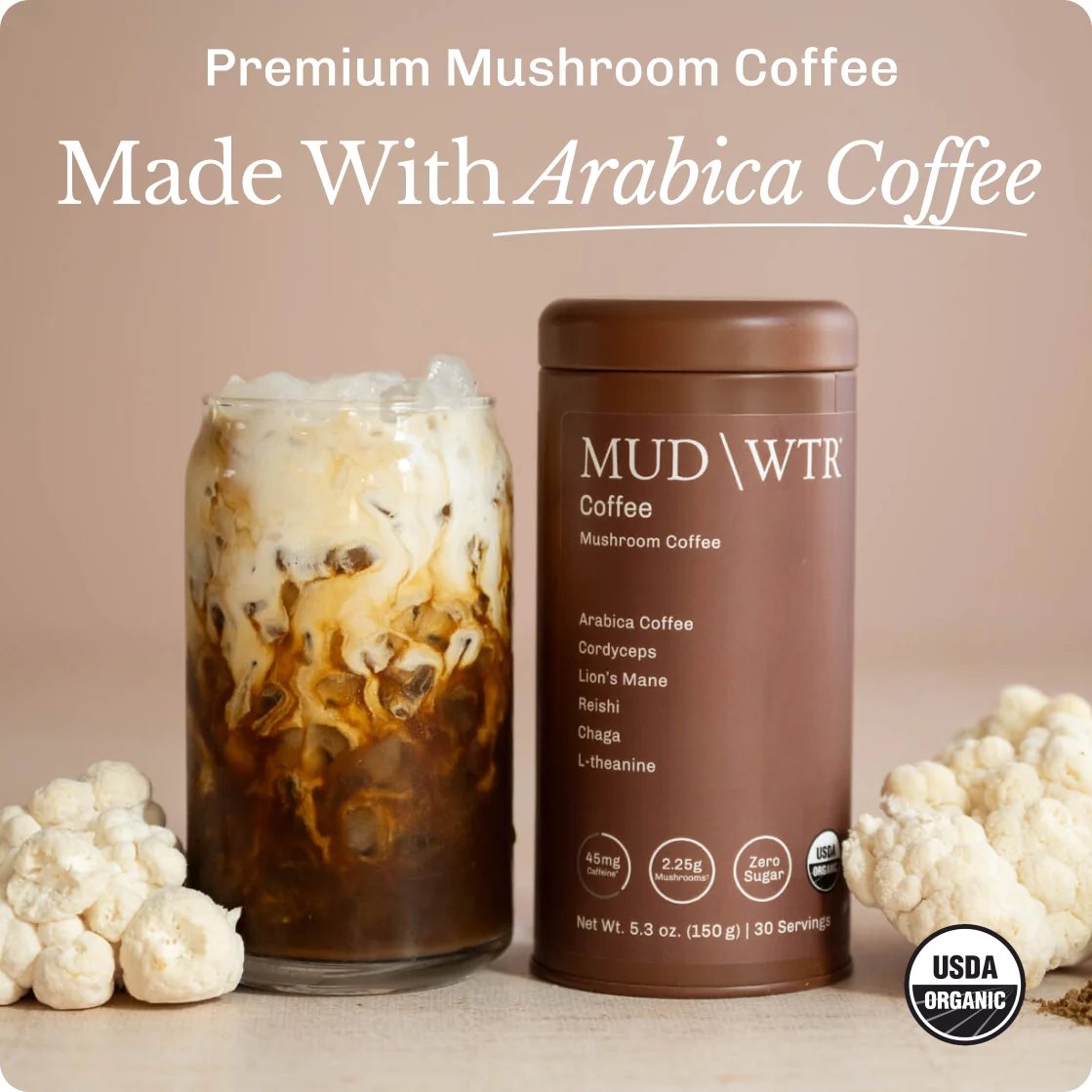
Coffee sells as a 30 serving tin for 50 dollars. It combines arabica coffee with cacao, masala chai and mushrooms including lion’s mane and cordyceps, plus L theanine. Prepare with hot water and milk or creamer as a morning coffee alternative.
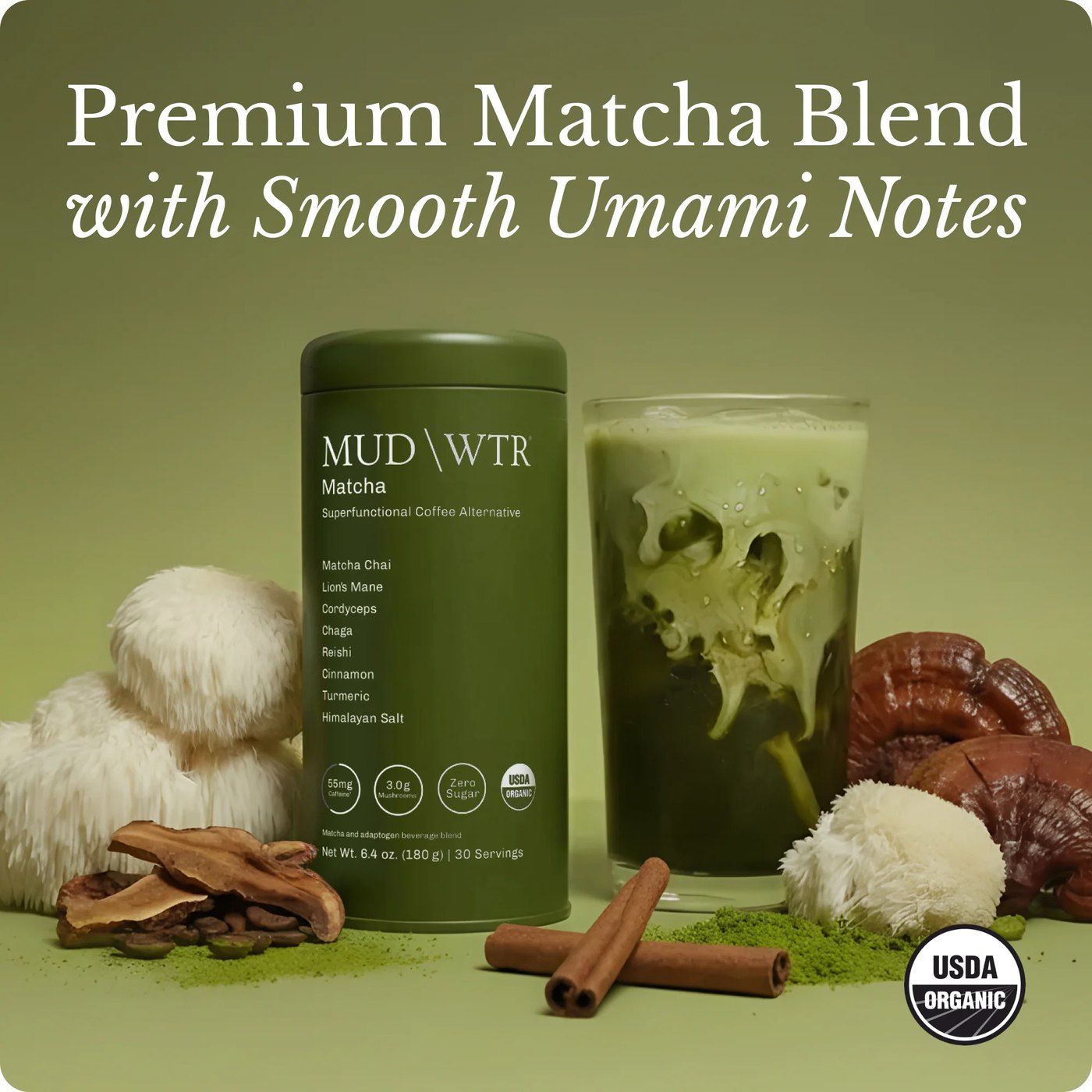
Matcha sells as a 30 serving pouch for 50 dollars. It contains 100 percent organic matcha with spices and mushrooms and naturally occurring L theanine, with a fraction of coffee caffeine. Prepare with hot water or milk as a morning rise formula.

Katherine Warren
Katherine edits the news desk and the monographs at Half Life. She keeps a spreadsheet of every dose she has seen on a label beside the dose used in the trial, and the gap between the two columns is usually the story.
More from Katherine Warren →