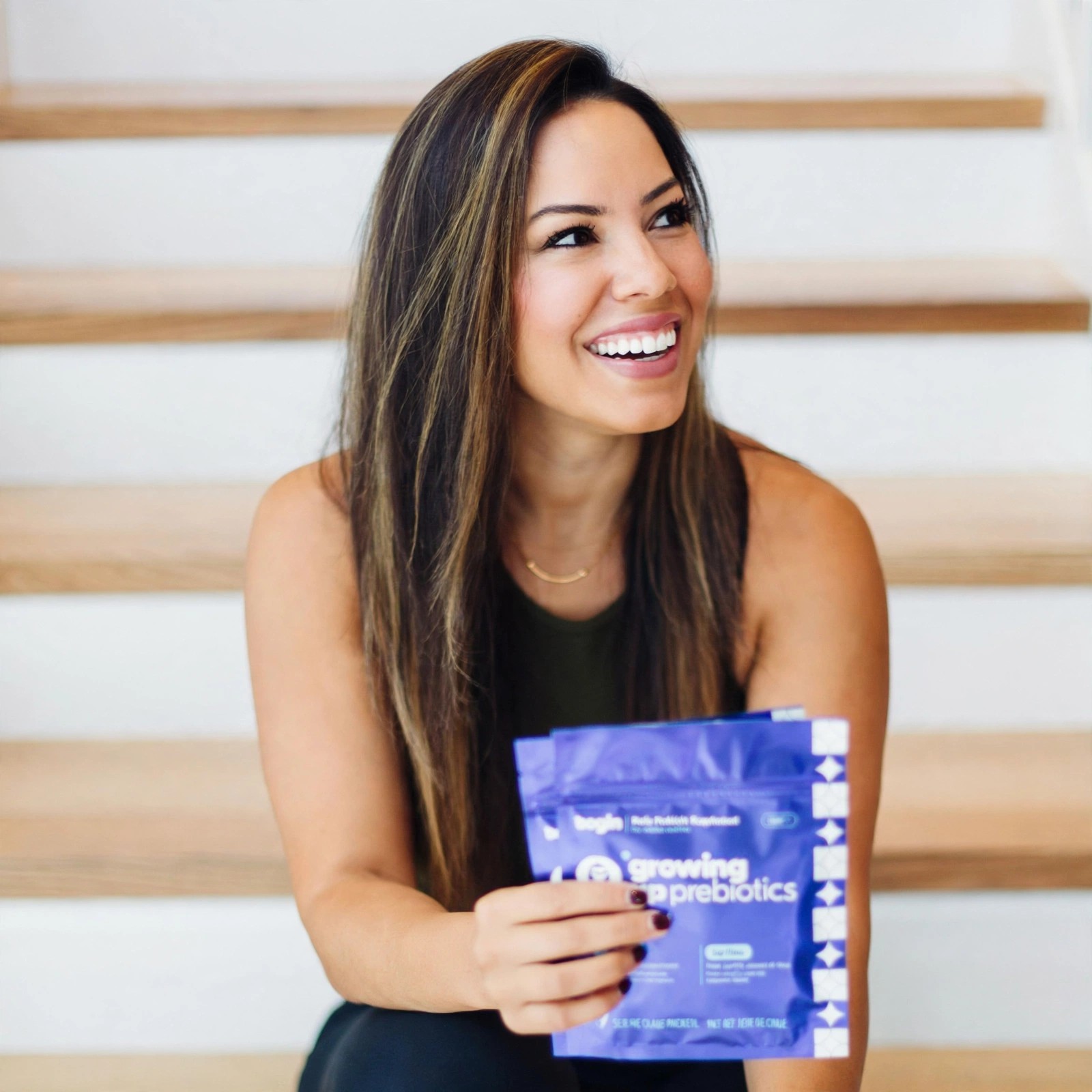
A kitchen counter tells the pharmacology story faster than a claim does. A stick pack that sits at room temperature for months, mixes into warm milk and still delivers its fiber weight is a stability statement, and Begin Health reports more than 140,000 parents now keep those packs on hand for steady stools and routine gut support.
Madeline Lauf keeps a formulator notebook that reads like a dosing log. She grew up in rural Illinois where cheap processed food shaped childhood diets, later worked in finance and then in tech marketing, and while living in Asia she watched families prize imported American infant formula. She tried first to make a cleaner formula for those markets, then a ready to drink milk for children, and both projects collapsed before she narrowed to what a small company could verify lot by lot.
The current catalogue is tight and easier to audit. Begin Health offers prebiotic fiber powders for children age 1 and older and a synbiotic containing HMOs for term infants from 0 to 12 months, formulated with registered dietitians, pediatricians and microbiome scientists. The thread through this interview is dose and disposition: which fiber, how much per serving, why a dry powder holds potency without cold storage, and where trial data ends and label language begins.
The milk project ended when funding ended after investors passed on a better for you ready to drink kids milk for nutrients kids lack. The parents drawn to that milk kept describing picky eaters with constipation and daily laxative use. Why did that report change the formula plan?
I grew up in rural Illinois, where the food environment does not exactly teach good nutrition. Health has mattered to me for a long time, and my career until now had been in tech. While I lived in Asia I noticed how much families there valued infant formula from the United States. Being from rural Illinois, my thought was that we might produce an improved version.
I soon found that launching a formula business resembled launching a drug company. There was testing, oversight, capital needs and long timelines. A lean team could not carry that load. You need to keep adjusting until something becomes workable. That early failure shifted my question. Instead of asking what would be perfect in principle, I started asking what we could manufacture to a high standard with our staff and budget, and confirm in every lot.
You learned that an infant formula startup was almost like starting a pharmaceutical company, with testing, regulation, capital and timeline beyond a lean team. What constraint did that place on your next product?
That stretch was humbling. We had developed a better for you ready to drink kids milk for nutrients kids lack. Investors said no and our funds ran dry. On paper, the story stops there.
Yet the families most interested in the milk had picky eaters with constipation and daily laxative use. They were not requesting new flavors. They wanted regular poopies and reliable potty time without a chemical laxative approach. So we changed course a third time and introduced Begin Growing Up Prebiotics for kid constipation. I came to see that lifelong health depends on how we begin. You need to persist even when quitting looks reasonable. We held the line on no sugar and no artificial fillers, and limited the task to one daily powder that parents could realistically use.
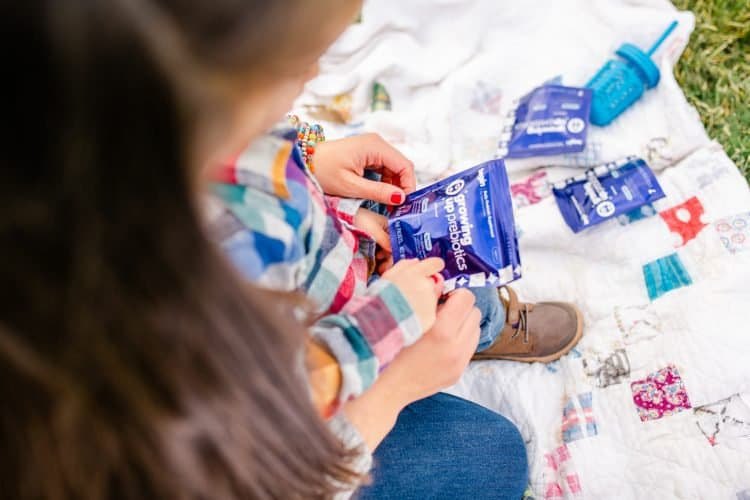
Your own history includes years struggling with gut issues, trying every solution and getting nowhere, and you often say the future of America starts with our kids. How does that background affect dose selection for ages 1 and up?
I dealt with gut problems myself for years, testing one remedy after another without progress. That history teaches close label reading. It also breeds doubt about fast remedies.
When we state that the future of America starts with our kids, and that unhealthy children create a large problem, we point to the early window. We formulate with a PhD in nutritional biochemistry and a registered dietitian, with guidance from pediatric gastroenterologists, pediatricians and scholars, including Belinda Jenks, David Madsen and Dr Gilberto Bultron. We accept no fillers or artificial ingredients. We prefer to develop science backed formulas with specialists rather than market sweetened kid products with fillers. For children age 1 and older, that choice yields a tasteless and textureless powder in 28 stick packs to stir daily into foods or drinks, hot or cold.
Daily Growing Up Magnesium combines magnesium with kiwi powder and prebiotic fiber from agave inulin in 28 servings for 70 dollars, so we price the milligrams. What is the source chain, and what processing sits between field and finished pack?
I will describe the chain in broad terms, since that is the portion we track and record. Agave inulin originates as fiber from the agave plant. Kiwi begins as harvested fruit that is dried and ground to powder. Magnesium begins as a mineral salt obtained from a supplier, rather than from cropland.
From harvest to completed serving, production involves drying and grinding, extraction or isolation when required, blending to specification, then encapsulation or stick pack filling to fill weight. Every incoming lot ought to include a supplier certificate of analysis, and completed batches receive third party lab checks for identity and for contaminants including heavy metals. I prefer to present records over promises: grower or origin, extract ratio or standardized level when relevant, lot and batch numbers, plus third party findings. Where a stage remains unclear, we acknowledge it. Careful use of a term like pure demands that level of proof.
You frame the category as probiotics are the live bacteria, prebiotics are the food for those live bacteria, and you favor food for good bacteria over live bacteria that need refrigeration. From a stability view, why start with fiber?
We repeat that distinction between prebiotics and probiotics, that probiotics are the live bacteria and prebiotics are the food for those live bacteria. That single sentence shapes production and home storage.
Live microbes may demand controlled handling and a cold chain to retain strength. Our prebiotic fiber behaves differently. So it remains stable at room temperature. So refrigeration is unnecessary. Begin can be baked. It can be stirred daily into foods or drinks, hot or cold. For a home buying for a partner, a child or a parent, that robustness counts. A compact set of products stored for years must tolerate a kitchen, a lunchbox and travel. Stability fixed our early rule: no refrigeration needed, no chemical laxative approach, and a fill weight a parent can confirm in the Supplement Facts panel and the other ingredients line.
We prefer formulating with experts around dose and data over selling sweetened kids products with fillers.
Madeline Lauf
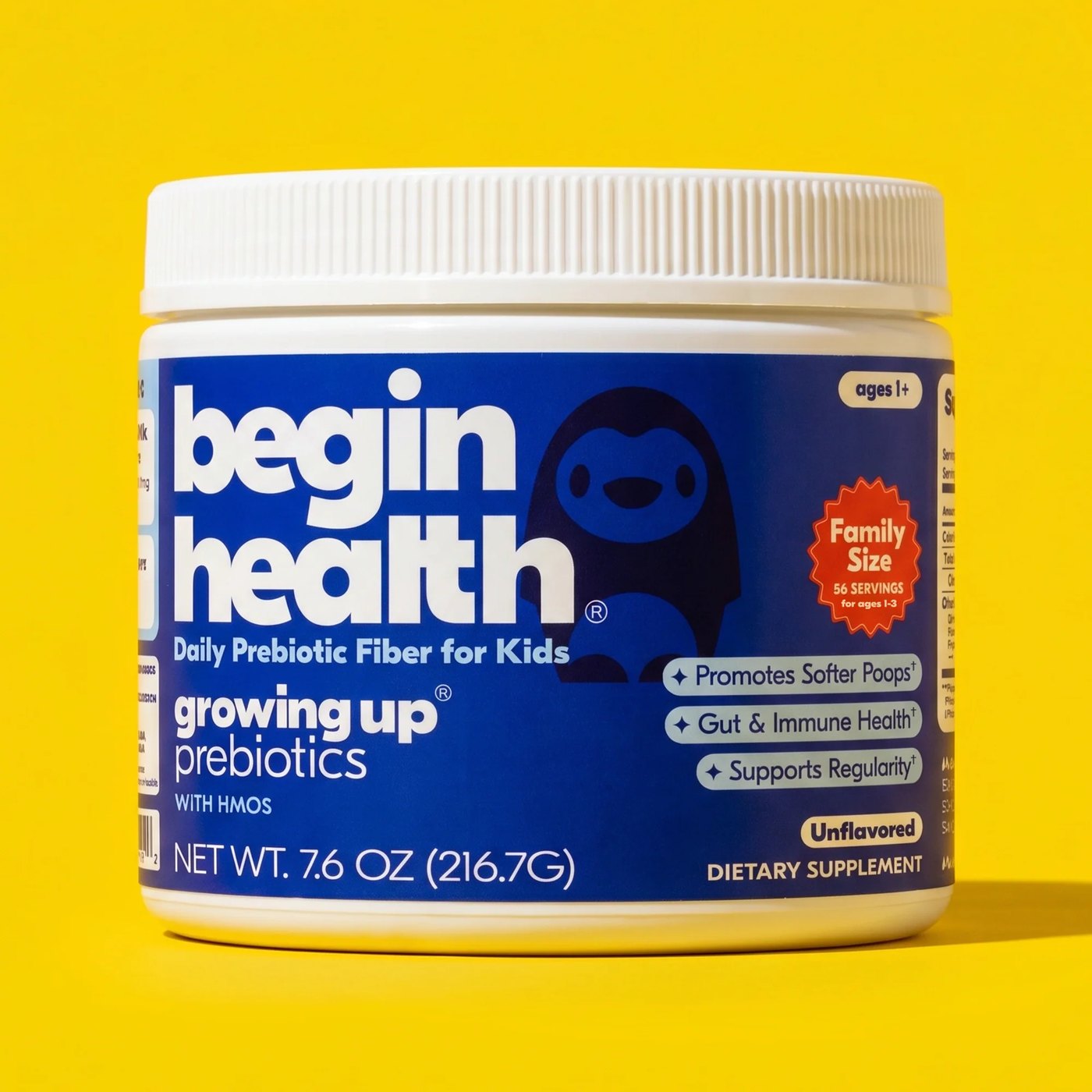
Daily Growing Up Prebiotics costs 70 dollars for 28 stick packs in Family Size Unflavored, with flavored versions at 73 dollars, and is described as trusted by over 140,000 parents for regular poopies. What should a label reader check first?
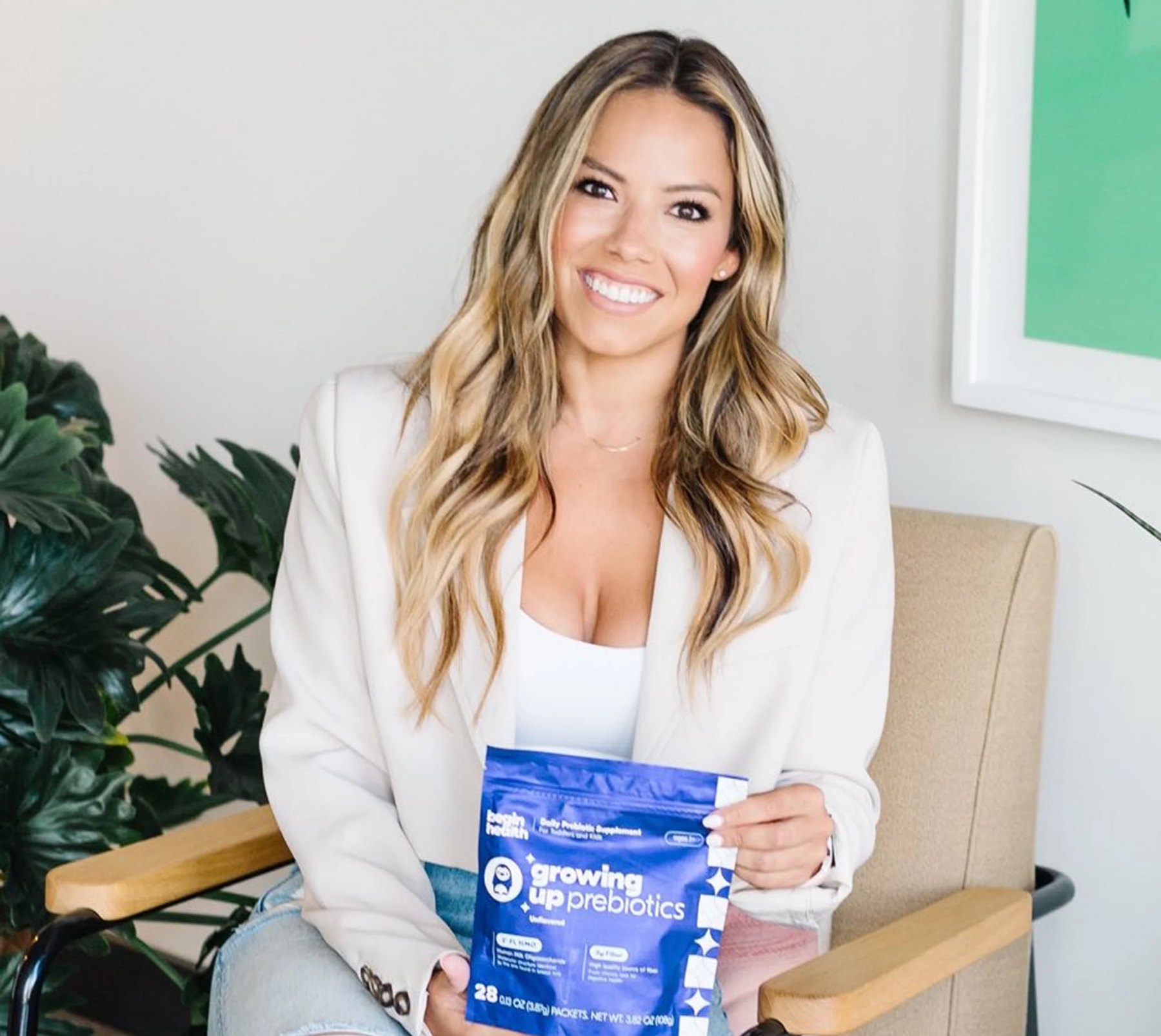
The panel presents a prebiotic fiber supplement for children age 1 and older. It is presented as a high quality gentle blend for regular poopies, predictable potty time and better gut health. The powder is characterized as tasteless and textureless, supplied in 28 stick packs.
I ask a careful shopper to read the Supplement Facts panel first, then the other ingredients line for fillers and flavor. Note the fiber source, the serving weight and the absences, because what is missing often explains the tolerance. Our exclusion list covers no sugar and artificial fillers, no fillers or artificial ingredients. Then consider administration. Stir daily into food or drink, hot or cold, with no refrigeration needed. The brand calls it a bestseller for regular poopies and constipation support, which is marketing rather than measured outcome. That phrase states intended use as the company defines it, not a guarantee of effect in any child. Retain the lot number and retain the carton until the stick packs are finished, so any query can be traced.
Beginbaby Pre and Pro with HMOs at 42 dollars brings the method to term infants ages 0 to 12 months as a 3 in 1 synbiotic. Why include probiotics plus HMOs in infancy when the kids range relies on prebiotics alone?
Infants present a separate baseline. The gut microbiome is largely established by age 3, within the first 1,000 days. Beginbaby Pre and Pro with HMOs is our 3 in 1 synbiotic with prebiotics, probiotics and HMOs to feed the developing baby gut, so we check strains and amounts.
For term infants age 0 to 12 months, we sought a daily booster that addresses gut health from first days through toddlerhood, regardless of feeding method. HMOs are prebiotics found in breast milk that feed beneficial gut bacteria, so they align with our food first reasoning. The probiotic fraction introduces live bacteria, which revives the stability issue, and that is why format, storage directions and testing carry greater weight here than in the kids prebiotic powder. Caregivers should read the strain, the count through end of shelf life when listed, plus the storage line, and hold expectations to what the label supports.
You cite that about 70 percent of the immune system lives in the gut, that 90 percent of kids do not meet daily fiber recommendations, and you also offer a Gut Health Test for 199 dollars plus coaching plans. Where does a powder stop and testing begin?
Those figures explain our attention to fiber and food first, not proof that any single product acts in any single child. About 70 percent of the immune system is said to live in the gut. Ninety percent of kids do not hit daily fiber recommendations. That background appears on our site because parents ask about starting points.
Our Daily Growing Up Immunity combines HMOs with efferra lactoferrin and vitamins D3 and C to help support a healthy immune system, using the brand wording. Our Gut Health Test at 199 dollars for Baby and Kid, and 537 dollars for Whole Family, provides an easy to read report with insights and next steps, per the store description. Coaching plans cover history and habits, useful context but not a substitute for dose and trial data. I view each as a distinct instrument with a distinct label. The powder lists fiber and other ingredients, and we compare that label against the study it appears to borrow. The test supplies a report. Coaching supplies a plan. None of them alone treats disease. When a parent seeks evidence, I direct them to the panel, lot documentation and third party testing, not adjectives.
You develop formulas with dietitians, pediatricians and microbiome researchers, and you reject fillers or artificial ingredients you would not give to your own kids. What data would allow full traceability from named grower to finished stick pack?
Full traceability requires names, dates and amounts at each stage, plus candor about gaps. We already identify the specialist side, formulations developed with a PhD in nutritional biochemistry and registered dietitian, plus Belinda Jenks, David Madsen and Dr Gilberto Bultron. On the material side, complete traceability calls for named growers or fisheries, harvest location and date, drying and extraction location and method, extract ratio or standardized marker, encapsulation location, fill weight, and lot specific certificates of analysis with third party lab verification including heavy metals.
Part of that record exists internally and part remains general in public copy, such as agave inulin shown without a named farm in the store text I have reviewed. To display the chain fully, we would have to publish origin by lot and connect the finished batch to those source lots in a format a parent can verify in under a minute. I prefer to keep pivoting until the concept succeeds rather than halt when funds fade, and I prefer to use food for good bacteria rather than add intricacy we cannot verify. That remains the next task.
Closing note from the desk
What remains is sequence. Lauf did not select a claim and reverse engineer support. She logged failed builds, kept a short refusal list and watched caregivers track stools with gamecards and stickers, then defined the smallest powder that batch records could defend.
Begin Health aims to deliver gold standard, science backed nutrition that feeds the early gut to help kids thrive as they grow. In measured terms, that translates to prebiotic fiber free of sugar or artificial fillers, durable on a pantry shelf, with named testing and panels legible without specialized training.
Product spotlight
Daily Growing Up Prebiotics, 70 dollars for Family Size Unflavored in 28 stick packs, with Strawberry Creamsicle and Banana Chocolate at 73 dollars. A prebiotic fiber powder for children age 1 and older. Stir one stick pack daily into foods or drinks, hot or cold, with no refrigeration needed.
Beginbaby Pre plus Pro with HMOs, 42 dollars for term infants age 0 to 12 months. A 3 in 1 synbiotic containing prebiotics, probiotics and HMOs to nourish the developing baby gut. Serve as a daily booster and observe label directions for preparation, storage and serving amounts.


Hailey Carson
Hailey produces the Half Life interviews: the reading, the question lists, the follow-ups. She asks every founder for the study behind the claim and, more often than you would expect, gets the PDF the same afternoon.
More from Hailey Carson →