Common is not the same as sufficient. That distinction shapes how Needed interprets a nutrient panel.
Common is not the same as sufficient. Julie Sawaya uses that phrasing for the red columns on her own home nutrient panel from 2016.
She and Ryan Woodbury had met as adjoining neighbors during year one at Stanford Graduate School of Business. Both arrived from finance and investment work, both had completed nutrition certificates independently, and both bought produce at the farmers market deliberately. They ordered the kits expecting validation. Almost each analyte landed in the low range. For two attentive eaters, the pattern suggested a gap between intake on paper and status in blood rather than individual neglect.
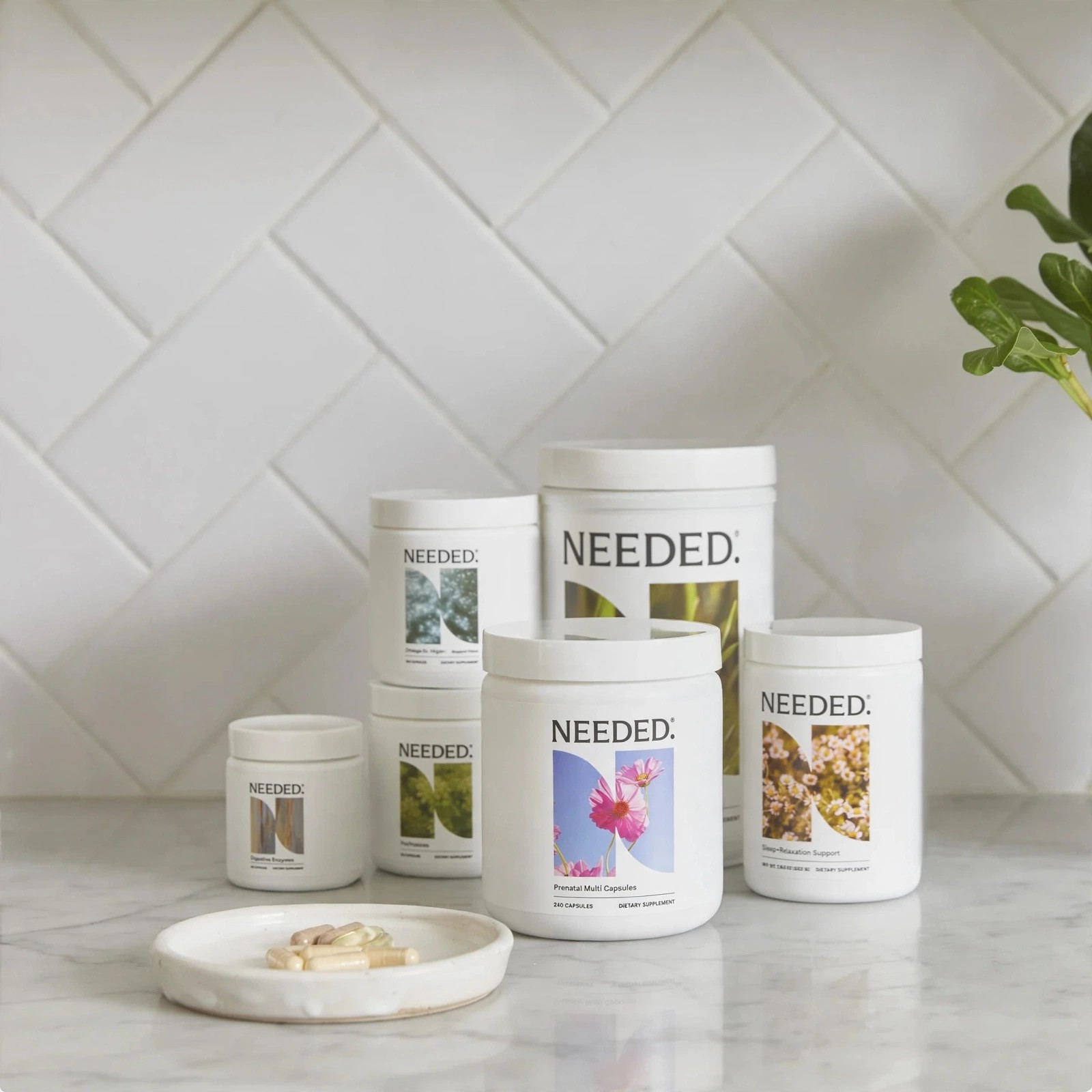
What grew from that finding is now sold as Needed. The company presents as a women led group of nutrition specialists, mothers of five small children collectively, supported by a network of over 20,000 clinicians who order nutrient and hormone assays. The center is termed the Nutritional System, built around a Prenatal Multivitamin containing 22 nutrients across three capsules daily plus a separate omega 3. The stated aim is markedly improved nourishment to confront depletion prior to conception, through gestation and after birth, oriented to what the founders term optimal intake rather than the floor that prevents deficiency.
What interests Half Life is the pharmacology beneath the positioning. Seed to Capsule traces a capsule to soil and solvent. We trace a capsule to milligrams, form, absorption, persistence and trial design. Needed accepts that audit. Each lot receives outside laboratory testing, each nutrient format and amount was checked against published research and clinician interviews, and the founders cite hundreds of discussions with obstetricians, midwives, naturopathic physicians, nutritionists and dietitians during their second Stanford year. Where upstream visibility remains incomplete, the interview states the limit directly, which makes the pharmacology easier to assess. That candor is useful because dose comparisons require clear denominators.
You both ordered home kits in 2016 expecting reassurance, and nearly every value returned low. Reconstruct that sampling day, that assay, that moment at the counter.
Home sampling was getting practical in 2016. We bought the kits assuming the readouts would validate our habits. We ate carefully, we studied panels, we acted with purpose. Then the reports arrived and both of us showed broad depletion, nearly each nutrient flagged low. That was sobering. You assume a prenatal will close the gap, yet ours indicated it had not. We kept the printouts and reviewed them together at home.
That prompted us to ask why care around conception, gestation and the months after birth receives so little nutritional attention. We found that 97 percent of pregnant people in the US take a prenatal, while 95 percent still show depletion. Common is not the same as sufficient. It signals that the reference frame sits too low. In our view the current US model for perinatal nutrition is deeply flawed. Many formulas track RDAs to prevent deficiency rather than to sustain favorable circulating levels. We chose to formulate toward optimal intake, even when that path required more time and more explanation.
You met as adjoining neighbors in year one at Stanford Business School, both from finance and both holding nutrition certificates. What did that shared corridor allow that bench work alone would not.
We met as adjoining neighbors in year one at Stanford Business School. That proximity shaped the work because we shared daily routines, the same hallway, the same produce stands, and early thinking about becoming mothers. We kept noticing how thin nutritional guidance felt. We both brought finance and investing backgrounds, so we could assess a category, and we had both finished nutrition education because the topic mattered to us personally.
Stanford let us test the thesis rather than only debate it. During the latter part of year two we used coursework to evaluate the concept. Nothing substitutes for a direct interview with a buyer or, in our setting, a clinician. We completed several hundred. We met with patients and with obstetricians, midwives, naturopathic doctors, nutritionists and dietitians. We sought to learn the real needs of our user. What recurred was that prenatal formulas fall short for most women. That corridor became a study, and the study became three years of formulation before any sale. The slow timeline reflected how many iterations the feedback required.
Your clinician network now exceeds 20,000 professionals who order nutrient and hormone assays. What did those serial results reveal that reference ranges did not.
Reference intervals show brackets. Clinicians show distributions. They review case after case, patient after patient, with repeated patterns of inadequate vitamin D, magnesium, choline and omega 3 status, even when food records appear sound. They also observe how shortfalls persist from preconception through gestation into lactation, when rest is fragmented and milk production depletes reserves. Nutrition can influence outcomes for parent and infant, yet only when status is quantified.
Physicians receive limited nutrition education, we hold MDs in high regard, yet their curricula emphasize other domains. A typical US prenatal appointment lasts around 12 minutes. That interval permits only minimal counseling. We therefore relied on practitioners who conduct hour long intakes and repeat labs. Across three years we supplied papers, they supplied cases, and we iterated. That loop is now filed under the Needed Standard. It is a process rather than a badge. Examine published research, assess the chemical form for uptake and tolerability, verify compatibility within the system, then assay the finished lot.
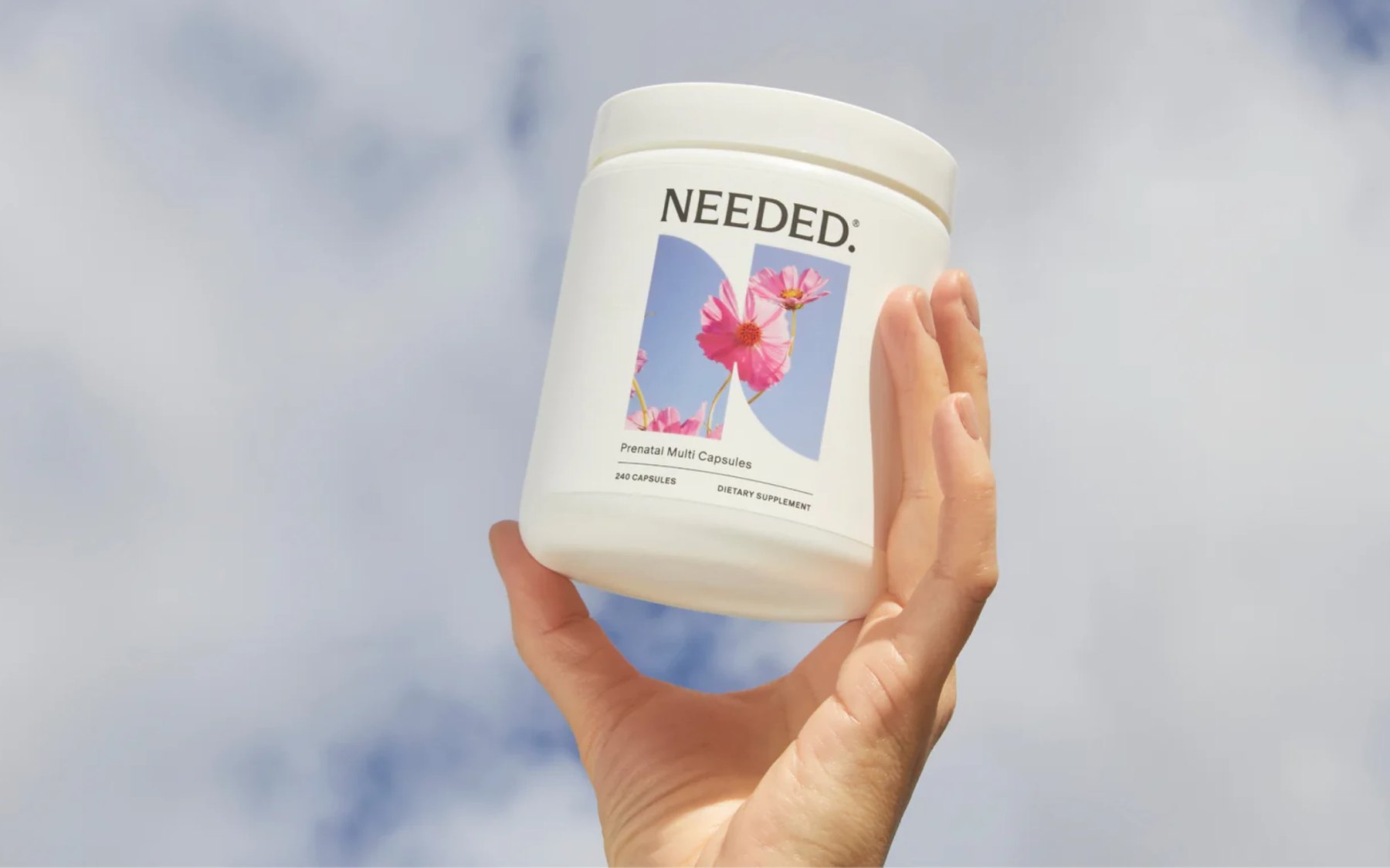
You describe most prenatals as built to RDAs and to capsule count, retail price and margin. Your Prenatal Multivitamin instead carries 22 nutrients across three capsules daily. How was that total load selected.
We declined to begin with tablet count. Many offerings are stock prenatals with light branding changes, constrained to one or two units and a target cost. We began with published trials and with clinicians who monitor levels routinely. We assessed each nutrient format and amount separately. Certain nutrients required levels above the RDA to mirror studied intakes. Others required restraint, because higher is not uniformly superior. Folate illustrates the point. We prefer a conservative folate amount when conservative matches physiology rather than chasing a megadose fashion.
Three capsules reflected the payload, not a marketing brief. That size permitted 22 nutrients at what we term studied intakes, which we characterize as eight times the nourishment in typical leading prenatals. The identical blend is available as a vanilla powder, one scoop per day, for those unable to swallow capsules. And we decline to sell items that cannot combine safely as a system. The multi, the omega 3, iron, choline, each must function inside one Nutritional System. That rule complicates development. It prevents concealed duplication or excess inside a single product. It also keeps steady state exposure predictable across combined use.
Folic acid requires enzymatic conversion to L-5-methyltetrahydrofolate, and you observe that genetic differences can impair that step. How does that pathway inform your folate format and amount.
Here the panel must reflect the biochemistry. Folic acid is manufactured. For utilization it needs reduction and methylation to L-5-methyltetrahydrofolate, the predominant circulating species. Literature reports that variants in MTHFR can reduce that throughput in some individuals, producing higher residual unmetabolized folic acid without a parallel rise in active folate. That observation assigns no diagnosis, it only shows why chemical format on Supplement Facts matters.
We therefore formulate directly with the active folate species, at a restrained level rather than an elevated one. Our principle is plain. We prefer a smaller amount when physiology favors restraint over following a high number trend because it photographs well on packaging. Readers will find exact micrograms and percent Daily Value plus capsule constituents on our label. We encourage a meticulous shopper to line up that row against competing brands, nutrient by nutrient, without our assistance. That is what we intend by refusing to leave women guessing without impartial data.
We would sooner keep the dose low when extra gives little than ride a high dose wave.
Julie Sawaya and Ryan Woodbury
You report that each lot undergoes outside testing beyond supplement requirements. For a meticulous shopper, what does a lot specific certificate of analysis contain.
A certificate of analysis belongs to one lot. It records lot code, fill mass, and assay outcomes for identity, strength and impurities relative to limits. In our program that involves verifying nutrients satisfy label claims across shelf life, plus screening for heavy metals, microorganisms and additional impurities in an independent facility. We submit each finished lot for third party evaluation, exceeding the baseline demanded for dietary supplements.
The baseline explains the contrast. Under present US regulation, manufacturers must observe current good manufacturing practice, confirm ingredient identity, and retain documentation, while finished goods receive no premarket clearance. Commissioning external analysis for every lot is optional and absorbs capital and calendar time, since stock remains quarantined pending outcome. We accept the delay. Any lot outside specification never ships. The code printed under the jar should connect to that record. When a company cannot produce that match with dates and thresholds, terms such as pure carry little weight. Request the paper behind the adjective. That document matters more than any front label wording.
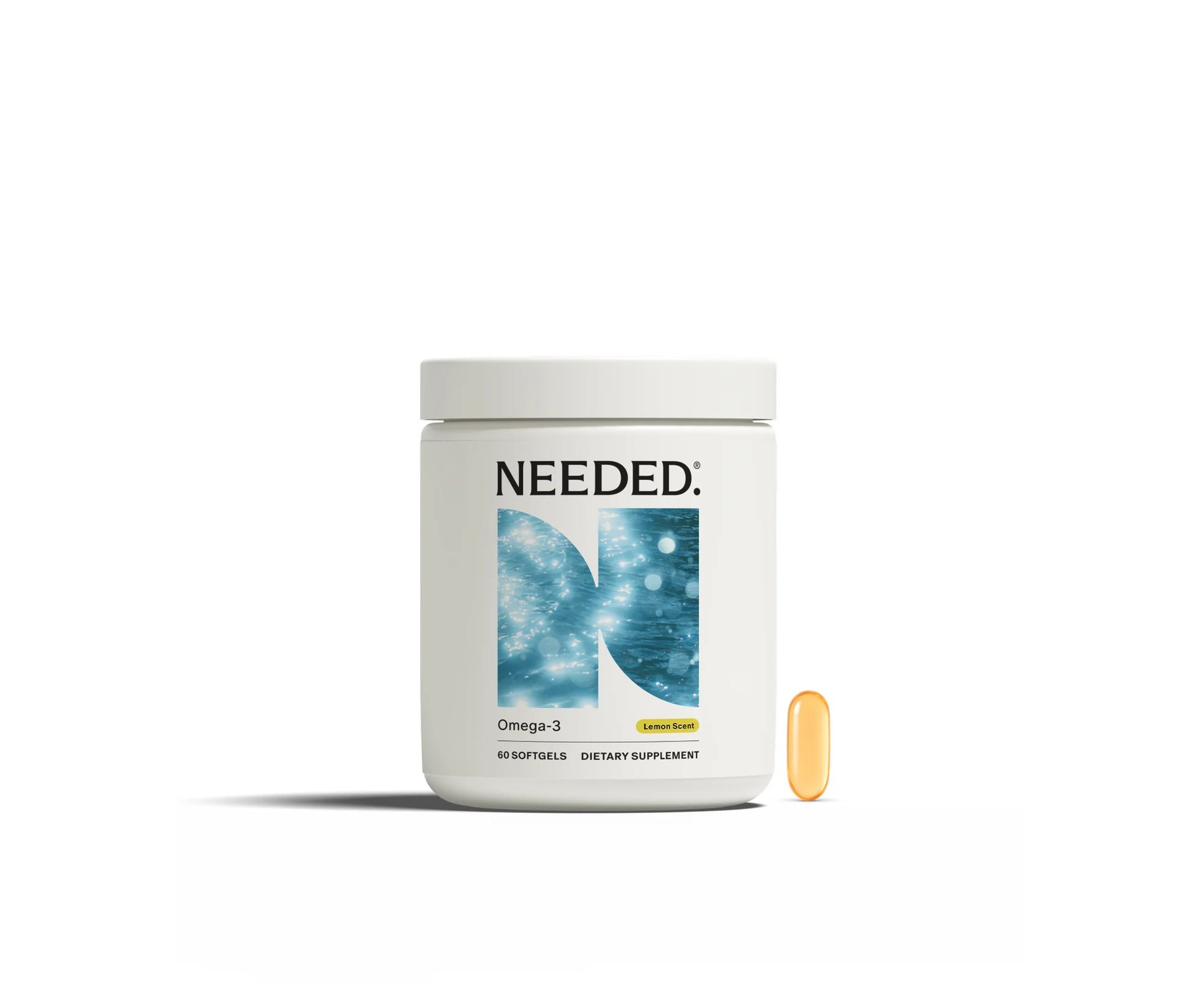
Your Women’s Omega-3 supplies 1,000 mg combined DHA and EPA daily as original or lemon fish oil. Why maintain fish oil apart rather than folding it into the multi.
Dose volume and physical chemistry dictate separation. Supplying 1,000 mg combined DHA and EPA at verified strength requires an oil quantity that cannot coexist with 22 additional nutrients in three capsules without creating an unmanageable pill load. We therefore kept it discrete, as a standalone softgel with serving content printed on the label, offered original or lemon. The labeling describes support for brain, heart and hormone health within daily intake, and the website bundles it with the multi in regimens.
Provenance in this case begins at sea rather than on farmland. We procure responsibly harvested fish oil, then validate identity and strength and screen for impurities including mercury as well as oxidation indices that reveal handling between harvest and encapsulation. Fish oil degrades with heat, illumination and air exposure, so processing is less relevant than custody here. Fresh stock, rapid sealing, cool warehousing, lot level assay. The lemon variant leaves DHA plus EPA content unchanged. It alters flavor and aroma, which influences consistent use during gestation when reflux and queasiness determine whether a softgel is swallowed. A regimen succeeds only with daily adherence sustained across months.
Powder against capsules is a practical decision in your catalog, with identical 22 nutrients as three capsules or a single vanilla scoop. What shifts in production and verification across those two delivery forms.
Nutrient goals remain constant, vehicle alters the work. Capsules demand powder flow, fill mass regulation and shell breakup. Powder demands dispersibility, taste, sweetness and texture, free from synthetic sweeteners, plus blend homogeneity so each scoop delivers a full serving from first to last dose in the container. Vanilla must cover mineral and B vitamin notes from iron and zinc without chalkiness. That calls for alternate carriers, altered mix durations and tighter humidity management.
Quality control tracks dosage form. Capsule lots undergo mass uniformity, breakup and strength through the shell. Powder lots undergo scoop consistency, moisture and strength in the mixture. Ratio defines any botanical component in the system, standardization indicates adjustment to a declared percentage of an indicator constituent, and fermentation when applied transforms the substrate prior to blending. Each completed lot in either format receives an independent certificate. When a household reorders for years, as many of ours do, lot to lot comparison should show an identical procedure rather than only an identical front panel.
Where along the chain can you identify grower and harvest date, and where does visibility fade. What would full display require.
We can describe our procedure and finished lot data more easily than we can disclose each plot and vessel behind every nutrient. That is candid. Certain botanicals originate on farms where grower identity, collection interval and drying practice are known. Minerals and marine oils pass through refiners where the informative trace is facility or fishery, custody documentation, and impurity screening. Extracts state ratio and standardization on technical sheets, and fermented inputs document strain and vessel logs.
What remains difficult to view externally is a consolidated upstream chart in a single public location, with amounts and dates tied to lot. Publication would need vendor consent, a common genealogy linking input lots to finished lots, and a package code resolving to that certificate without revealing more than Supplement Facts already discloses about composition. We stand behind current traceability, namely defined form, quantified dose, system compatibility and independent testing of each lot. The coming stage involves farm and vessel identifiers attached to lot codes. That record is under construction, because a discerning customer should not rely on our assurance for purity. Documentation should support it, lot by lot.
Closing note from the desk
What remains after review is a dosing logic that can be audited. Sawaya and Woodbury recount hundreds of interviews, a decision against stock formulas, a three capsule multi sized by studied amounts, and a separate omega because lipid volume will not compress. The wording stays tied to panel values and laboratory measures rather than broad wellness phrasing.
Needed aims to counter depletion before, during and after gestation with amounts linked to research and with independent testing of each finished lot. Whether the premium is justified depends on the panel and certificate in the hands of the reader. The company at least defines the questions to pose, lot by lot, and marks where the supply map still lacks detail. Half Life records that as a workable starting point for comparison.
Product spotlight
Prenatal Multivitamin, 42.99 dollars per one month supply. Three capsules per day supply 22 nutrients at what the maker terms studied intakes. Positioned as the core of the Nutritional System, taken with food per directions together with omega 3 and other focused items without redundancy.
Women’s Omega-3, 29.99 dollars per one month supply of fish oil offered Original or Lemon. Every daily portion contributes 1,000 mg combined DHA and EPA. Used each day as the lipid partner to the multi, kept cool and sealed and taken per label to encourage steady use.


Katherine Warren
Katherine edits the news desk and the monographs at Half Life. She keeps a spreadsheet of every dose she has seen on a label beside the dose used in the trial, and the gap between the two columns is usually the story.
More from Katherine Warren →