
Five grams. That serving of hydrolyzed marine collagen defines Crushed Tonic, flavored to recall banana milk sold in a Korean convenience store.
Five grams is a modest amount to support a brand. For Sally Olivia Kim, it spans from a kitchen burn in her early 20s to a New York City company started in April 2017. After finishing NYU and a period in finance, Kim sustained serious burns on her arms, with blood blisters that left healing slow and easy to see.
Prescribed silicone patches plus ointment gave her little change. She started to study ingestible collagen for support of skin recovery, and consumed pills, powders and liquid shots each day. She describes skin that looked plumper and hydrated with time. People close to her saw the same powders and declined them. They said they could not face another shot because of the fishy taste.
That refusal created Crushed Tonic. Kim flavored powders at home using coconut, coffee and matcha. She began the company as a weekend shop and recipe blog while employed in digital strategy. Publisher W. W. Norton contacted her about a book, which turned into The Collagen Glow, stocked at Barnes and Noble, Target and Amazon. She left her job, self funded, changed manufacturers to grow, and developed wholesale with Sephora, Equinox and others. What others overlook is how concrete her sourcing work is. Marine peptides built with Korean labs, traceable to the exact fish, third party screened for metals and fillers, Halal and Kosher certified. Then packed as something people will want each day.
You said friends told you they could not bring themselves to finish it after that first serving. That flavor issue is familiar with marine powder and I read it as a solubility signal. What did you blend at home with coconut plus coffee plus matcha that showed flavor was the supply chain.
I never set out to launch a brand. I set out to repair my skin. I learned about the power of collagen after a severe burn when I needed methods to help my skin mend and regrow as fast as possible. I had blood blisters. My arms appeared raw. The patches seemed clinical and the ointment remained on the surface. I required something I could ingest from the inside, daily, without a second thought.
So I consumed pills, powders and liquid shots every day. Some tasted terrible. Some mixed poorly. I persisted because if I had not suffered such a bad burn with blood blisters and required collagen for its medical value, I doubt I would have continued daily either. That remains the truthful part. I noticed plumper, hydrated looking skin and wanted the dose and trial cited. I grew focused on urging everyone near me to use collagen once I observed the benefits appearing in my skin, hair and elsewhere. The company followed because the formula delivered. First it delivered for me, then it needed to deliver for people with no burn driving them.
Your marine line is listed as hydrolyzed peptides near 4,000 Daltons, 5g per serving, with 0 to 3g sugar, built with Korean labs and flavor scientists. Where exactly does that marine collagen begin, and how do you trace which fish it came from.
We select marine collagen from fish skin over less costly bovine hides when possible, since we prefer the small peptide size and the dissolution behavior. Our marine range contains hydrolyzed peptides at around 4,000 Daltons, at 5g per serving and 0 to 3g sugar by flavor. Dalton size in this context denotes molecular weight following hydrolysis. Smaller fragments usually dissolve more readily in liquid, which counts for a daily beverage.
The chain begins at the fish processor, then drying and enzymatic hydrolysis in Korea, then blending with our flavor system, then packing. We partner with Korean labs and flavor scientists for that stage. Each batch receives third party screening for heavy metals, purity, dissolvability and absorption, with a Certificate of Analysis on request. The certificate links a lot number to assay outcomes. The brand says the marine powder traces to the exact fish, so I asked for lot records and form. What I can present today is the test file by lot plus our Halal and Kosher certifications. What stays less visible to a buyer is the identity of each vessel or farm printed on the label itself.
Strawberry Milk Collagen is also 45 dollars for the bovine pouch and is sold as a daily skin and hair ritual with clinically backed benefits cited by the store. What trial supports that wording on the label, and what amount does it truly promise.
Our healthier version of nostalgic strawberry milk tastes smooth and creamy. Prepare it as a creamy drink. Sold as a daily skin and hair ritual. The store page mentions clinically backed benefits for skin and hair. I wish to be exact about the meaning and the limits.
That wording points to studies on collagen peptides supplied by vendors and to our independent checks for purity and dissolvability. It fails to mean our flavored powder underwent drug testing. Supplement labels bear the FDA disclaimer stating the product is not intended to diagnose, treat, cure, or prevent any disease. Our label presents Supplement Facts, the collagen quantity, sugar, and other ingredients. I prefer candor about results to excess claims. Some buyers continue because they enjoy the ritual. Some continue because they observe the appearance of more hydrated looking skin with time. Taste sustains daily use, which explains our line that it tastes as good as it works.
You sell both marine and bovine versions in Banana Milk and Strawberry Milk, plus a vegetarian formula. How do you choose which source fits which product, and what does standardization mean on your label.
I prefer marine collagen from fish skin to less expensive bovine hides for our central skincare ritual, yet I recognize households vary. A partner might shun fish. A parent might favor bovine. Hence Banana Milk and Strawberry Milk exist in marine or bovine versions. The vegetarian milk stands as a separate formula for those who skip animal collagen altogether.
Standardised, as we apply it, denotes we target an identical fill weight on each run. Five grams of collagen in each serving, so I want dose and peptide size matched to trials. Flavor varies. Peptide weight stays fixed. The label carries the Supplement Facts panel, the serving size, the collagen quantity, the other ingredients line, and sugar content. Low sugar options span 0 to 3g. Sugar free options employ alternate sweetening systems and declare them. Critics of taste or format will always exist, and I accept that while asking about dose. My task involves holding panel consistency lot to lot, so a shopper viewing it in January finds the same figures in June.
You reached 1 million dollars in revenue in 2018, then were described as worth over 1.5m in less than a year, sold at Sephora and Anthropologie. You were still founder plus seven part time staff, with creative led by cofounder partner Edward Yeung. What failed first as you scaled, and why did you change manufacturers.
Becoming an entrepreneur was not strictly my plan. I opened Crushed Tonic in April 2017 as a weekend store and recipe blog while I worked in digital strategy. Then it expanded. We generated 1 million dollars in revenue in 2018. We stocked at Sephora and Anthropologie, described as worth over 1.5m in less than a year. I remained founder plus seven part time employees, with creative directed by my co-founding partner Edward Yeung.
Production failed first. A home kitchen method cannot stretch to wholesale. Dissolvability shifts. Flavor wanders. Fill weight wanders. So I resigned my job, bootstrapped, and moved manufacturers to scale. That required fresh trials with Korean labs, fresh screens for metals, toxins and fillers, fresh files for every lot. Quit trying to convince everyone that you are not going to fail. That advice helped me most. I ceased explaining and concentrated on the lot record, the taste, and whether Sephora, Equinox, Erewhon, JetBlue, Anthropologie, Nordstrom and QVC as named partners got an identical product twice.
Some buyers keep it because they enjoy the ritual, which is fine if dose is clear.
Sally Olivia Kim
You opened with the line, I was not trying to build a brand, I was trying to fix my skin. After the cooking accident in your early 20s, when silicone patches and ointment did little, what did daily collagen mean for you.
Once I checked back, they told me they could not bring themselves to use it after the first shot. That comment remained with me. My parents, my friends, men and women seeking support for skin and hair ask me about proof of absorption. They stopped, not from skepticism about the powder, but because it tasted gamey and the scoop felt like labor. I understood then that finding a quality peptide covered only half the lot record. The remaining half involved adherence.
Healthy should not taste bad, or be hard to use, though I still check milligrams first. I aimed to direct more focus and attention to ingestible beauty, beauty from within. At home I began adding coconut, coffee and matcha to powders. I sought a product that dissolved clear and could blend into water, milk or coffee. No giant scoops with fluff. No sucralose. No fillers. The concept stayed simple. Create something craveable so a household retains it for years, not for a week. That produced our mantra to remain the most honest and transparent about contents, and to reject anything superfluous.
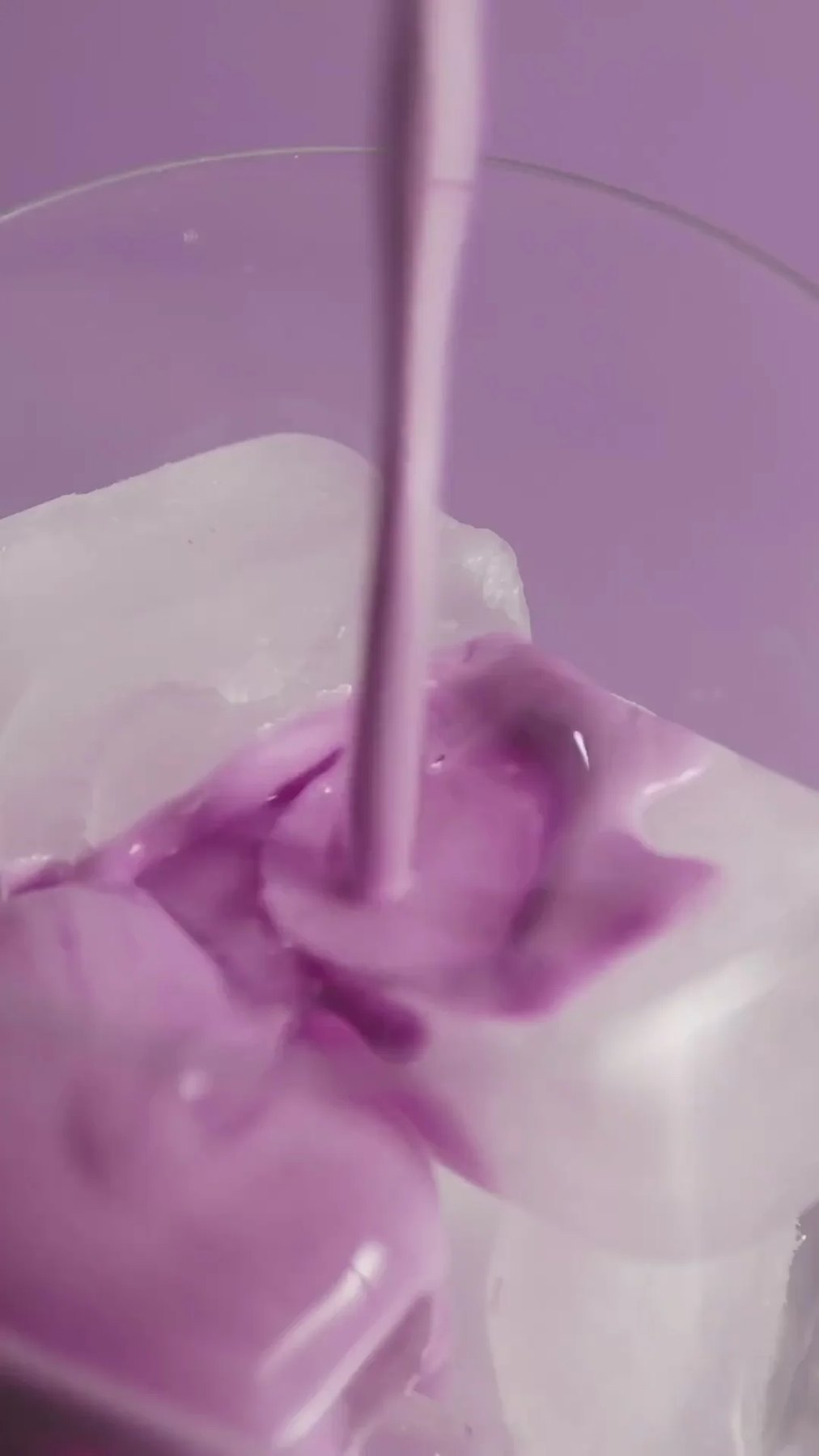
Your signature Banana Milk Collagen is 45 dollars for the bovine pouch and nods to Korean convenience store milk. What did Korean flavor scientists alter in extraction or drying to keep it low sugar and clear dissolving, and what remains unclear.
Banana milk from a Korean convenience store carries nostalgia. Sweet, milky, lightly vanilla. Our Banana Milk Collagen preserves that character at 5g collagen per serving. Bovine low sugar one month pouch costs 45 dollars. Marine low sugar one month pouch costs 55 dollars. Sticks carry a higher cost per serving due to the single serve film and fill operation. Stir into water, milk or coffee, and I note how fully those peptides disperse. The brand states it dissolves clear.
What the labs altered was particle handling post hydrolysis, plus the flavor carrier. Reduced carrier allows lower sugar and lower cloud. That approach sustains 0 to 3g sugar while retaining the creamy note. What can be traced covers the peptide lot, the flavor lot, the finished batch, and the third party outcomes. What remains opaque to a reader covers the drying curve and extract ratio at the processor, which we omit from publication. I can state the country of processing and the assay panel. I cannot yet present a public map from boat to pouch. Publication would demand permission to release processor names and vessel records by lot, which forms the next step.

Your refuses list is clear. No fillers, no heavy metals, no sucralose, no oversized scoops with fluff, all of which I verify. How is freedom from heavy metals proved in each lot, and what happens to a batch that fails.
Our mantra involves remaining the most honest and transparent. Our promise covers clinically tested collagen that tastes amazing, with no fillers, no metals, just results. No fillers denotes we skip bulking powders that enlarge the scoop appearance. No sucralose denotes we select alternate sweetening systems and disclose them. No oversized scoops with fluff denotes we anchor the serving to the 5g collagen dose, not to a large tub.
No heavy metals receives verification through third party analysis of each batch for heavy metals, purity, dissolvability and absorption, with a Certificate of Analysis on request. The laboratory assays a retained sample drawn from the lot. When lead, cadmium, arsenic or mercury surpass our specification, the lot stays back. That rule stands. The failed lot gets held, reviewed, and declined if it cannot satisfy spec. Encapsulation does not apply to these milks as a format. Pouch and stick filling undergoes weight verification. That documentation forms the sourcing portion a careful buyer may request by lot number.
You wrote The Collagen Glow after W, and I read the recipes for dose clues. W. Norton approached you, and it is stocked at Barnes and Noble, Target and Amazon, which says little about dose. How did writing recipes change your view of dose, and what do you tell a household buying for a parent or partner.
I authored the collagen based cookbook called The Collagen Glow after the publisher contacted me. It sells at Barnes and Noble, Target and Amazon. Composing recipes compelled me to reason in servings, not scoops. A creamer intended for coffee and matcha. A banana or strawberry milk intended for water or milk. A broth suited to cooking. Every recipe contains the 5g serving, so the household obtains an identical dose without added measuring.
For a parent or partner, I advise reading the panel for form and milligrams first. Select marine or bovine according to diet. Choose the pouch for value or the sticks for travel, after comparing the dose per serving. Select low sugar or sugar free according to taste. Place it beside your morning drink station, since the finest powder equals the one you finish. I prefer making collagen craveable to forcing people to choke it down. I prefer refusing to frame wellness as gender prescriptive. Men and women, aging parents, friends, so absorption and evidence should apply broadly. When taste pleases and the paperwork stays clean, the ritual continues. That constitutes the full provenance chain, from field to capsule, or in our instance from fish skin to cup.
Closing note from the desk
What remains with us concerns plain talk on adherence. Kim fails to claim that a larger dose counts if the cup sits half drunk. She claims that flavor, clear dissolution and a small truthful serving lead a household to use the same lot for a month. That represents a sourcing claim of another sort, tracked in repeat pouches.
Crushed Tonic aimed to create ingestible skincare that people maintain. Marine or bovine at 5g, screened by lot, flavored as banana or strawberry milk, without fillers and without sucralose. The vessel name has yet to reach the label. The assay record by lot has. We record both, directly.
Product spotlight
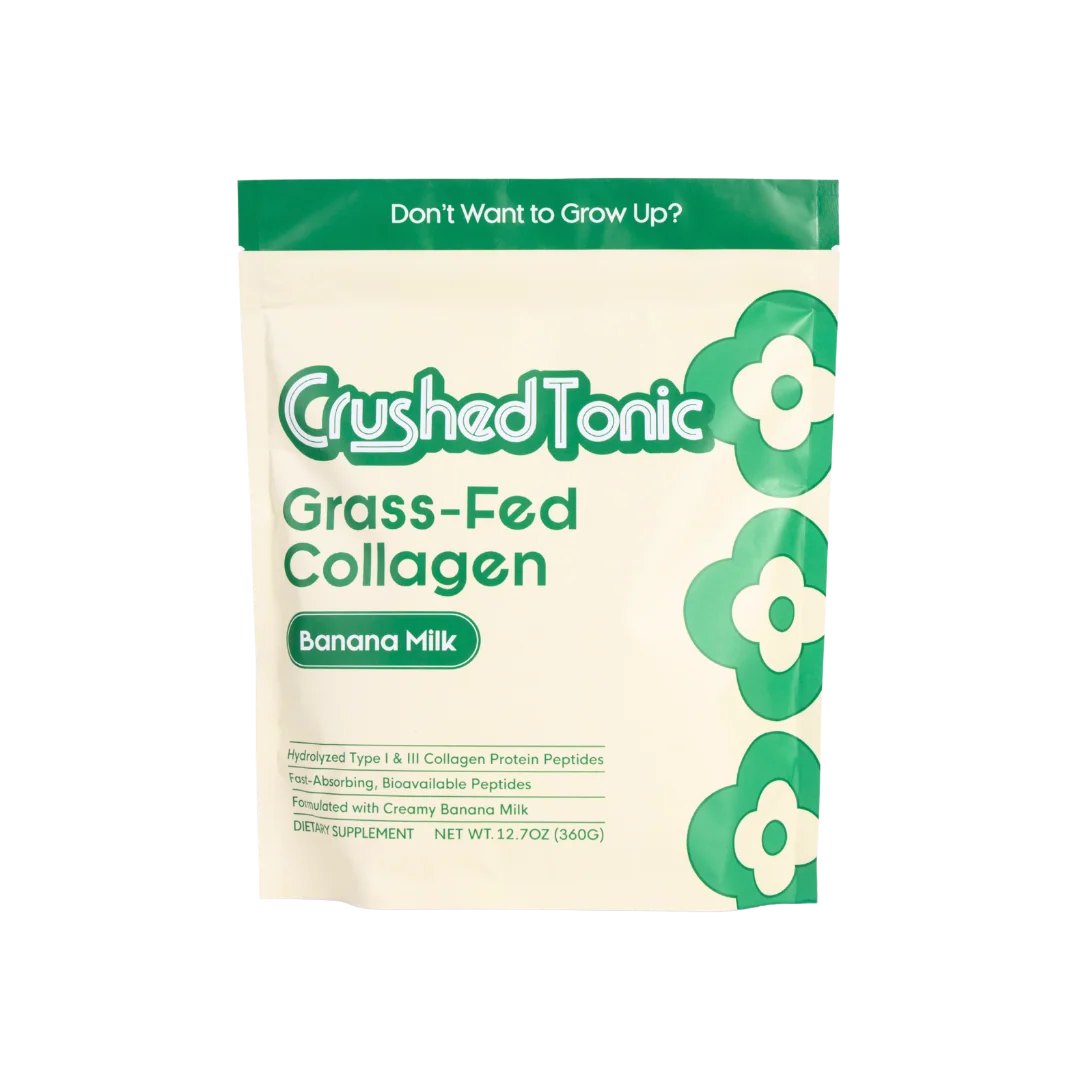
Banana Milk Collagen runs 45 dollars for the bovine low sugar one month pouch and 55 dollars for marine, while 28 drink sticks run 55 dollars bovine and 65 dollars marine. Sweet banana plus milky vanilla notes, 5g hydrolyzed collagen per serving. Blend it into water, milk or coffee until clear and note what dose that gives. Use daily for a month to assess taste and ritual fit.
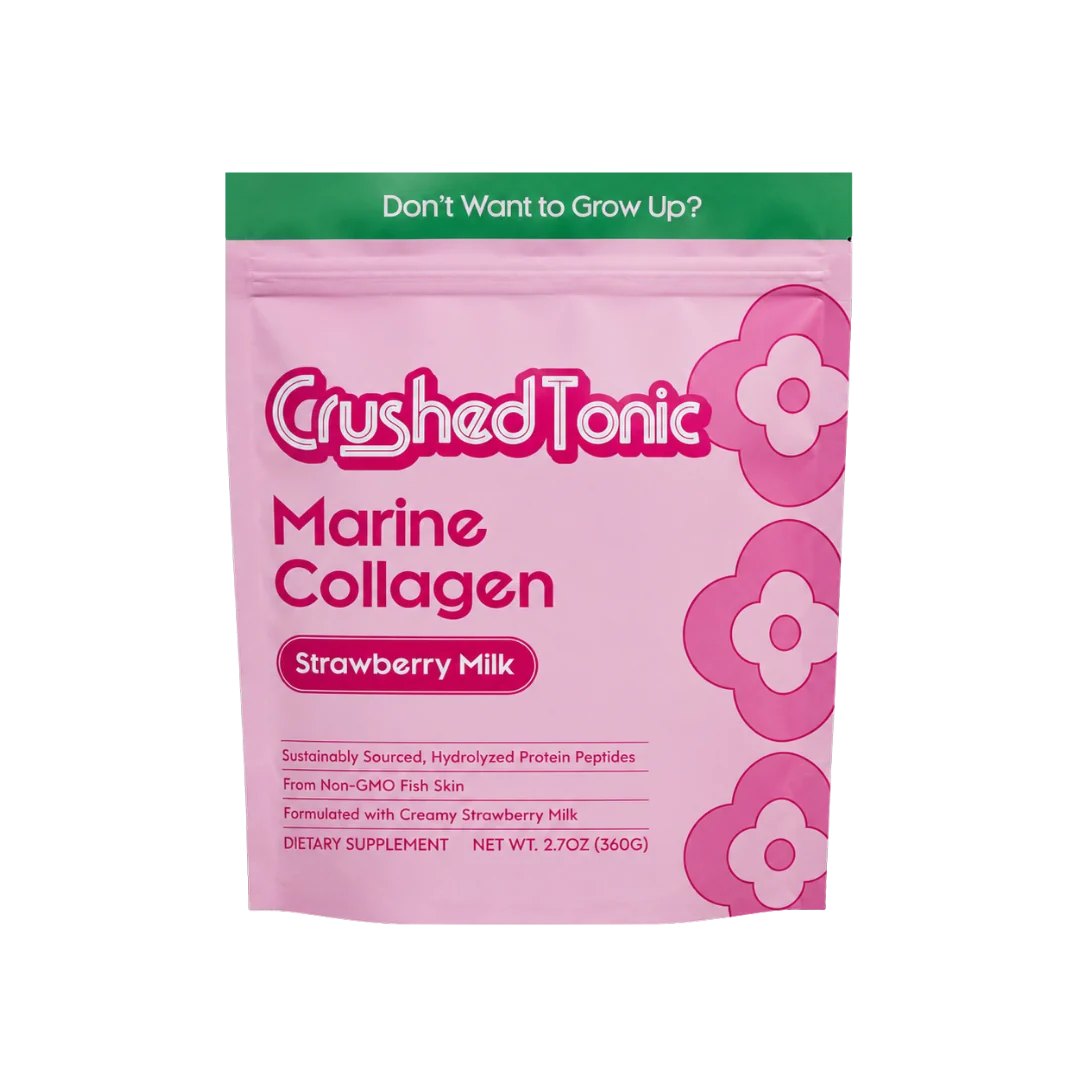
Strawberry Milk Collagen runs 45 dollars for the bovine low sugar one month pouch and 55 dollars for marine, with a 10 drink stick trial at 29.99 dollars. Creamy strawberry milk taste, with 5g collagen per serving listed on the panel. Prepare as a creamy drink once daily. Review the Supplement Facts and other ingredients line prior to picking marine, bovine or vegetarian.

Hailey Carson
Hailey produces the Half Life interviews: the reading, the question lists, the follow-ups. She asks every founder for the study behind the claim and, more often than you would expect, gets the PDF the same afternoon.
More from Hailey Carson →