
Twenty grams of protein for eighty five calories looks clean on paper until you ask about form, amount absorbed and proof per lot. Brett Ender and Harry Gray built Noble Origins around beef isolate, collagen peptides, colostrum and organs in a single powder. We read the panel, then the tests the panel rests on.
The front of the tub prints 20 grams of protein per scoop. That figure needs context on source, processing and verification.
Brett Ender and Harry Gray entered supplements as hosts of The Meat Mafia Podcast, interviewing farmers, physicians and founders about animal foods from well raised livestock. Two years after starting Noble Origins they taped a candid talk about constructing the firm from zero, still using the same vocabulary of service and plain food.
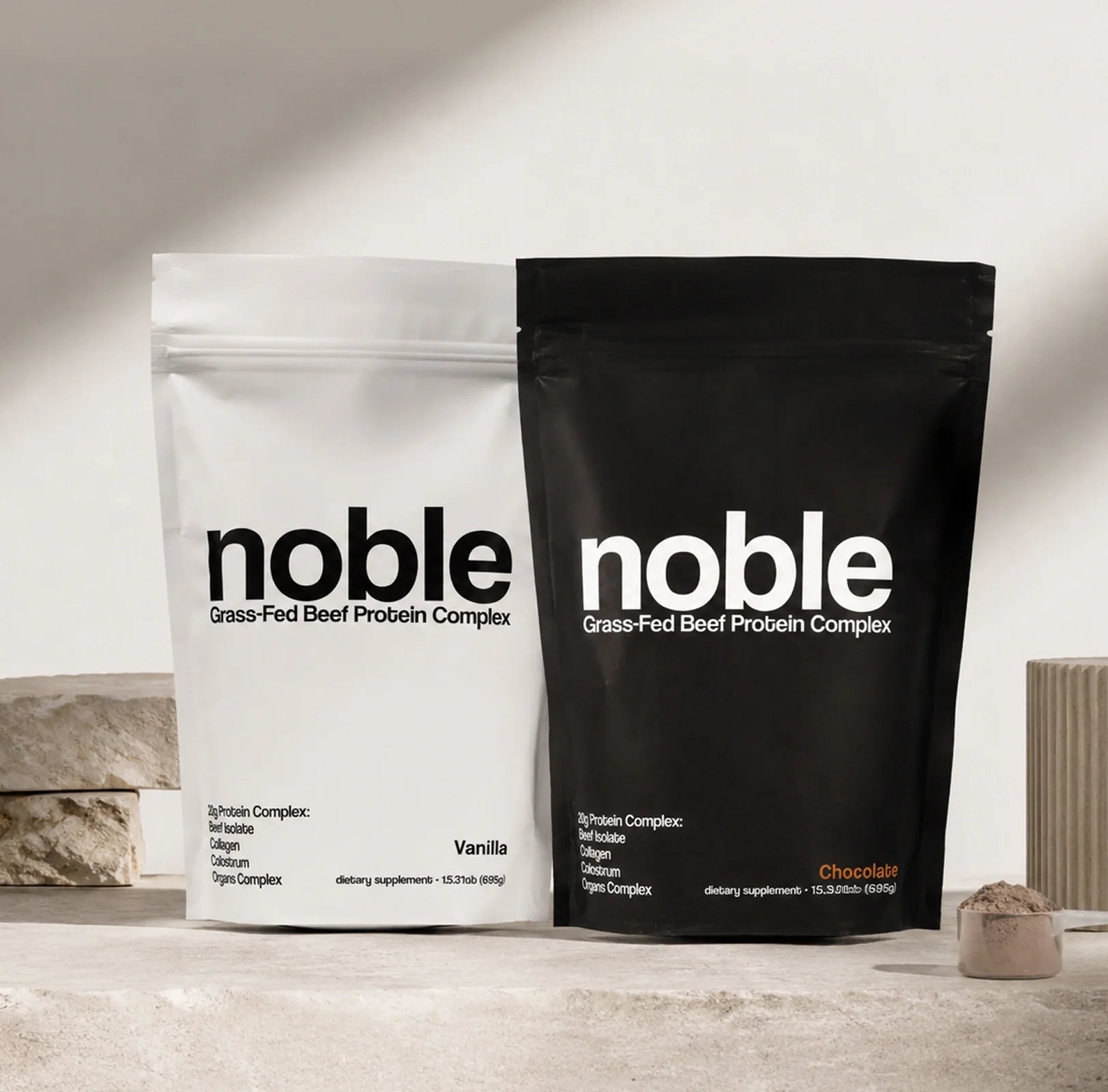
What they now sell is a nose to tail blend centered on 100 percent grass fed beef protein isolate, hydrolyzed collagen peptides, grass fed bovine colostrum and an organ mix, sold as vanilla and chocolate sweetened with stevia. What stood out on close reading is the exclusion list. No whey protein base, no fillers, no artificial ingredients. The question for this publication is whether milligrams, forms and third party screens support the front label claim, lot after lot.
You present Noble Origins as everyday fuel from real food, formulated with ingredients that justify inclusion. Your site states the beef protein isolate and nose to tail blend come from 100 percent grass fed cattle raised on regenerative farms. What does that claim mean inside your supply chain, and which farms supply it.
We launched Noble Origins to make everyday fuel from actual food. That sentence drives each choice. Each component has to justify inclusion. No surplus, no waste. We hold those values firm. That calls for zero compromise.
By 100 percent grass fed cattle from regenerative farms we describe animals fed grass across the full lifespan. We rely on 100 percent beef protein isolate as the core protein. That isolate begins as genuine beef. Protein gets isolated while surplus fat, cholesterol and non protein fractions get taken away. Then we include hydrolyzed collagen peptides, grass fed bovine colostrum and an organ mix because those represent the dense fractions of the animal that many powders omit.
We list no single ranch on pack at present. Our beef flows via vendors that pool animals from grass fed herds kept under regenerative methods. I understand that falls short of the lot level traceability buyers seek. Full proof would show farm identities, harvest dates and batch paperwork tied to each production run. We are moving toward more of that documentation.
The label lists four animal inputs per scoop, beef protein isolate, hydrolyzed collagen peptides, bovine colostrum and an organ blend. Most shoppers have previously purchased only whey. Take us through each input in the order it reaches the plant, and the form in which it arrives.
Sequence counts because every fraction starts differently. Beef protein isolate comes in as a dry isolated protein derived from beef. It serves as our central protein and it supplies the 20 grams of protein per serving shown in Supplement Facts. Every serving also carries 85 calories on the current label.
Hydrolyzed collagen peptides arrive as a dry peptide powder. Hydrolyzed signals that collagen was cleaved into shorter chains for easier dispersion. Then grass fed bovine colostrum comes in as a dry powder. Colostrum means early milk gathered after calving, dried with care for stability. Then the organ mix arrives as dry organ powders milled and blended at a set ratio.
All powders converge at blending and fill, rather than encapsulation. Fill weight per scoop is calibrated so a single scoop daily provides 20 grams of protein. Vanilla and chocolate share this foundation. The difference lies in the natural flavor system plus cocoa in chocolate.
The label lists 20 grams of protein and 85 calories per serving, with subscriptions framed as 20 grams, 40 grams or 60 grams of protein per day. That calculation equals one, two or three scoops. How did you choose that serving, and what sits in the other ingredients line.
We fixed one scoop daily at 20 grams of protein because the amount reads as straightforward daily fuel. It stays simple to log. Where a home uses two scoops, label arithmetic gives 40 grams. Three scoops gives 60 grams. That format allows a couple or a parent to split one tub without estimation.
The Supplement Facts box shows protein, calories and the added nose to tail blend. The other ingredients line lists natural flavors plus stevia used for sweetness. We avoid whey as the protein base, we avoid fillers and we avoid artificial ingredients. That pledge on the front of the site must align with the back of the tub.
One nuance deserves close reading. Grass fed bovine colostrum naturally carries trace whey, casein and lactose. That follows from colostrum as a dairy derived substance. So our no whey statement means no added whey protein. People who exclude every milk protein should study that line and judge prudently.
Your mission page says Noble Origins was built as different fuel in an industry dependent on cheap fillers, hidden irritants and artificial ingredients. You were podcasters first. What moment led you to manufacture a powder yourselves rather than recommend another brand.
In a field of shortcuts, we opted for service. We had talked with many founders and growers in the program. The same void kept surfacing. Consumers sought protein free of shortcuts, a daily option that skipped whey and skipped artificial flavors and sweeteners.
Food consumed should support the body, not burden it. That conviction recurred. We sought a plain clean protein powder containing the dense fractions of the animal. Our formulas aim to support physical potential through real food. Noble is built to fit smoothly into life and support strength and potential.
So we formulated it. At Noble, we support fueling the body as nature designed. That pointed to beef protein, collagen, colostrum and organs inside one scoop. No whey. No fillers. No artificial ingredients. Ever. No fillers. No junk. Only sound, Noble fuel.

We chose one scoop daily for 20 grams of protein because that reads as a clear everyday fuel dose.
Brett Ender and Harry Gray
Stevia and natural flavors carry substantial load in a beef based powder. Why select those, and what should a label reader wary of organ taste expect from vanilla and chocolate.
Beef plus organs bring a savory edge. Vanilla and chocolate have to cover it without artificial flavors. We selected natural flavors with stevia for sweetness. That preserves the no artificial ingredients pledge while leaving the powder practical for everyday mixing.
A label reader should anticipate a soft cocoa or vanilla drink, not plain beef broth. A single scoop stirs into water or milk and collagen assists suspension. Certain palates still notice the base, chiefly in water. That tradeoff comes with true food components in a sweet matrix. We prefer to declare the base openly rather than bury it under a heavy flavor system.
You state the powder receives independent testing for 178 banned substances. For a careful buyer, what does that screen include, who retains the certificate of analysis, and what does it leave unproven on heavy metals or farm origin.
Testing mattered from day one because protein powders depend on trust. We report the finished powder gets independent screening for 178 banned substances. Such a screen is a list based assay performed by an outside lab. The laboratory checks the sample versus a defined roster and records pass or fail per substance.
A certificate of analysis covers a defined lot or batch. It records analytes, methods, limits and outcomes. We retain those files by lot, and the outside lab keeps its own copy. When a buyer queries a tub in hand, the lot code underneath links that tub to its file.
That panel alone does not establish farm source. It does not trace to pasture. Heavy metals need a distinct assay with distinct thresholds, expressed in parts per million. A reader of a certificate should confirm lot number, assay date, lab identity and whether microbes and heavy metals ran alongside the banned substance panel.
The site calls the cattle grass fed and the land regenerative, while the label shows no ranch name, harvest date or extract ratio. What is traceable now, what remains opaque, and what would allow naming the grower.
Traceable now are formula plus finished lot assays. We can cite input specs for 100 percent grass fed beef protein isolate, hydrolyzed collagen peptides, grass fed bovine colostrum and the organ mix. We can cite blending and fill logs plus third party outputs linked by lot codes.
Opaque still is the field chain. We do not disclose ranch identities, harvest intervals or slaughter and drying locations by lot. Beef protein isolate and collagen remain processed inputs. They move through more intermediaries than a whole cut. Lacking farm level lots preserved through drying and milling, we cannot state the grower on pack confidently.
What naming requires is custody records from ranch to dryer to blender, with lot numbers kept intact. That calls for agreements that mandate origin lots on every inbound certificate of analysis, plus batch logs that join inbound lots to each finished lot. That work takes patience, yet it alone lets us say where exactly this comes from, and how do you know.
Colostrum and organ powders respond poorly to heat and time. How are they dried and handled prior to blending, and how do you verify a delivery meets spec on arrival.
Colostrum begins fluid and needs gentle drying, then cool dry holding. Organ tissue begins fresh and needs rapid handling, drying, then grinding to powder. Duration and temperature count across every transfer, from collection to dryer to warehouse to blender. When a load rests warm or moist, quality declines long before tub fill.
On arrival we assess against specification. That covers identity, look and smell, moisture, plus confirmation the certificate of analysis aligns with the lot code on sacks. Fill weight and blend uniformity get verified at the powder blender. When a lot fails spec, it stays out of the finished batch. That rigor forms part of what we intend by service over shortcuts.
Two years after founding you recorded a raw behind the scenes talk on building Noble Origins from the ground up. In retrospect, what failed, what changed in sourcing or testing, and what stays unfinished.
Early the plain plan failed. We assumed sound inputs would align in stable volume. They did not. Grass fed beef protein and colostrum vary with seasons. Organ supply moves with harvest calendars. Lead times lengthened. We learned to forecast further forward and to approve alternate vendors without easing the spec.
We altered documentation rigor. Each component earns its place, but now each lot must earn it as well, through aligned certificates and clean batch linkage. We strengthened inbound inspection and finished assays, including the third party screen for 178 banned substances. That slowed daily operations and made them more exact.
Unfinished remains field evidence. We can demonstrate contents of the scoop and lab findings. We still cannot display every pasture behind every tub. To live noble, in our phrasing, means to reclaim health, live purpose and nourish with nature’s perfect protein. The next phase means tying names and places to that pledge, lot by lot.
Closing note from the desk
What lingers after review is the short exclusion list. No added whey, no fillers, no artificial ingredients reads simply and proves hard to sustain through seasons, vendors and flavor batches. Ender and Gray cite service and intent often, and the sparse formula shows that stance.
Noble Origins aimed to build daily fuel from real food, combining beef, collagen, colostrum and organs in one scoop. Finished screens and lot files can be followed. Pasture behind the powder stays unnamed. We note both facts directly, and future labels should add farm identities, harvest dates and inbound certificates.
Product spotlight
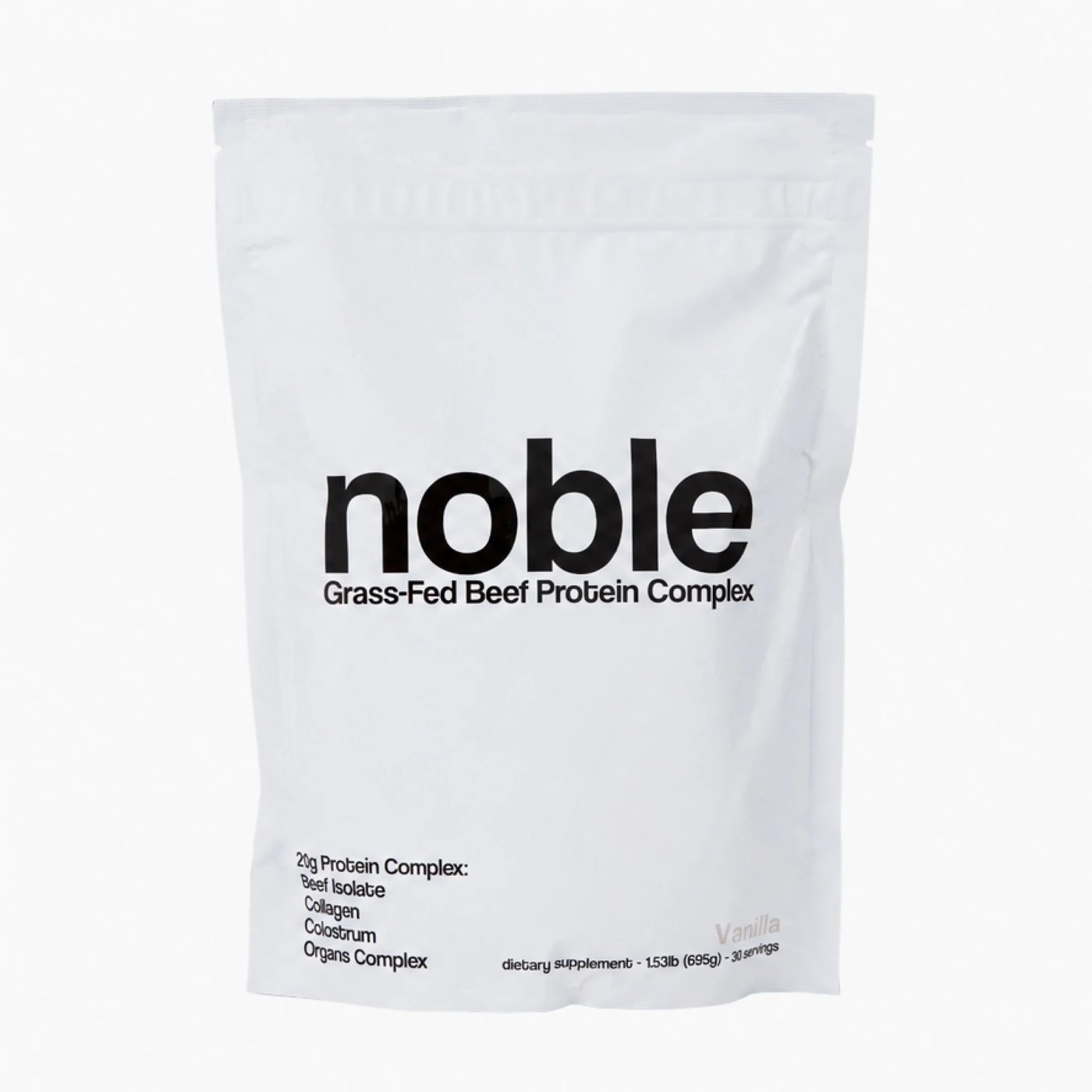
Noble All-in-One Protein Vanilla, 79 dollars for 30 servings in the 30 serving tub, with 60 servings shown at 158 dollars, 90 servings shown at 237 dollars and 180 servings shown at 474 dollars. A beef protein plus collagen foundation with colostrum and organs, vanilla flavor with stevia sweetness. Take one scoop daily for 20 grams of protein, stirred into water or milk.
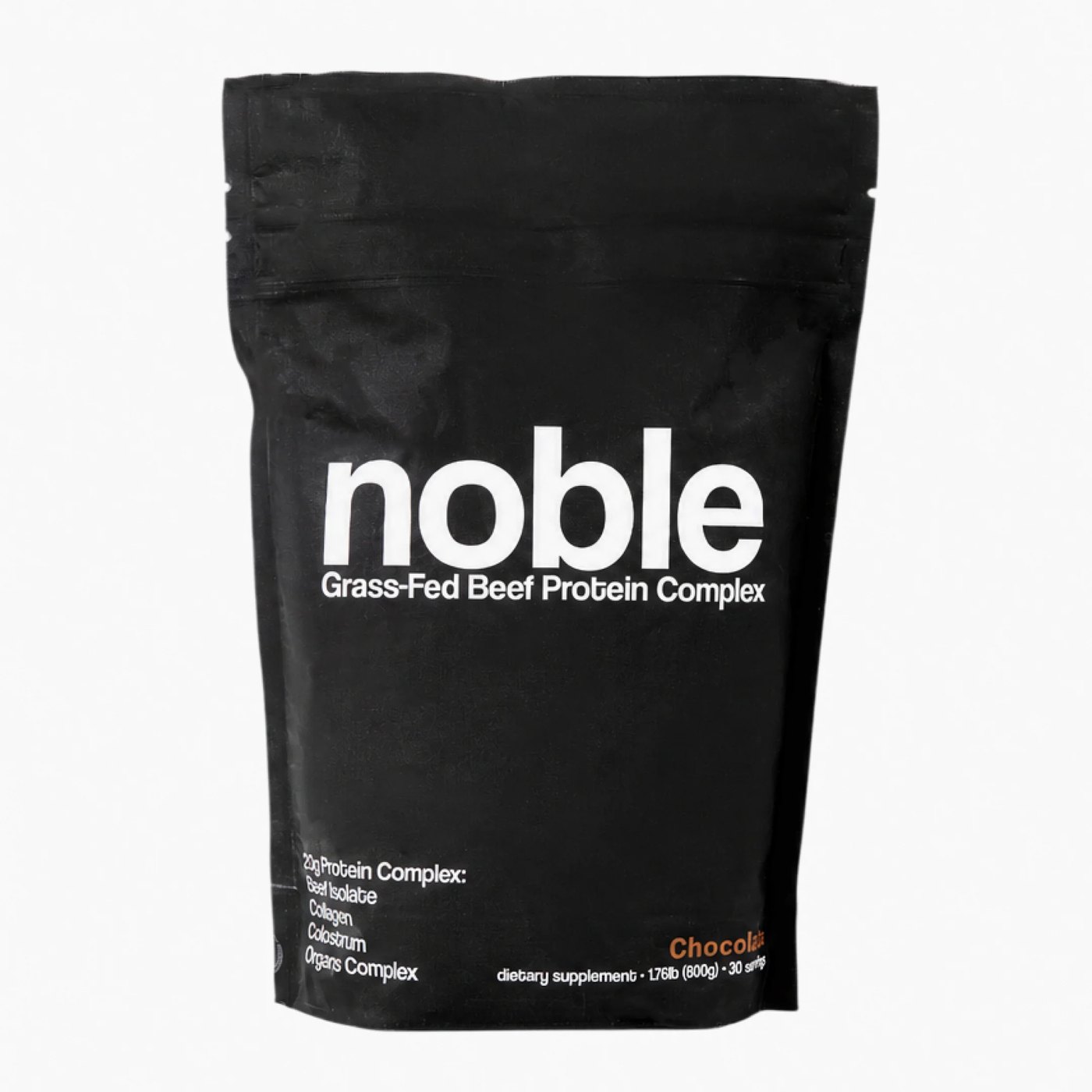
Noble All-in-One Protein Chocolate, 79 dollars for 30 servings in the 30 serving tub, with 60 servings shown at 158 dollars, 90 servings shown at 237 dollars and 180 servings shown at 474 dollars. The same nose to tail base with cocoa and natural chocolate flavor, sweetened with stevia. Take one scoop daily for 20 grams of protein, shaken thoroughly and taken as part of a consistent daily pattern.

Hailey Carson
Hailey produces the Half Life interviews: the reading, the question lists, the follow-ups. She asks every founder for the study behind the claim and, more often than you would expect, gets the PDF the same afternoon.
More from Hailey Carson →