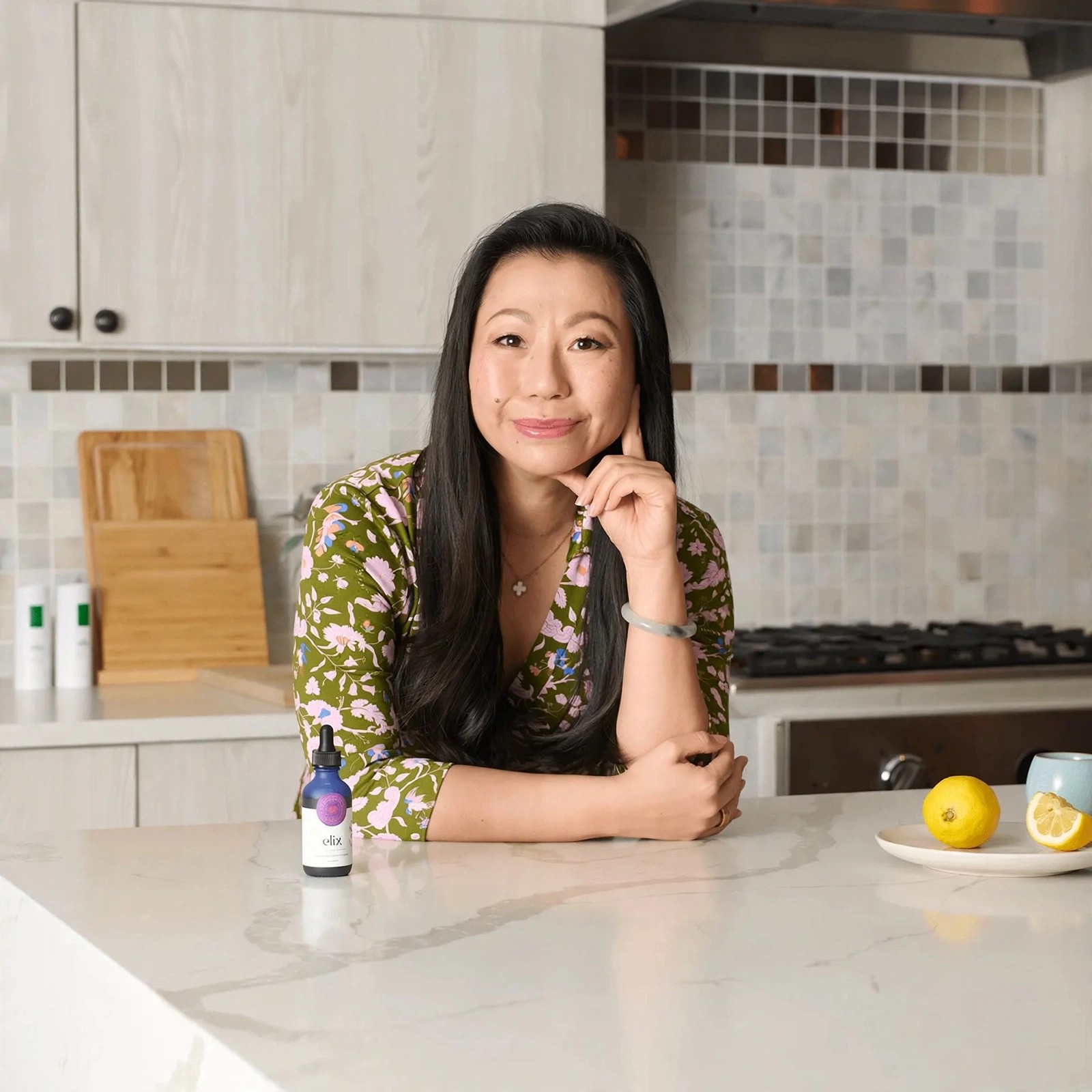
“They boosted my mood without taxing my mind or body,” Jen Batchelor said of her first kitchen tonics. The line sounds soft until it is read as a dosing problem.
A mood lift with no alcohol hangover still needs milligrams, solubility and stability in 8 fl oz. On December 5th 2018 Batchelor put the Kin Euphorics site live and made the first commercial sale. Behind that sale sat years of home steeping, reading in Ayurveda, then a year with nutraceutical firms learning how to hold functional ingredients in stock in a small pack.
Batchelor spent childhood in Saudi Arabia where her father made beer and moonshine for expat parties. In the United States she later called alcohol disconnecting, a separation from body and company. In her late 20s on the Lower East Side she started blending herbs at home, seeking mood and company without what she framed as a cost to mind or body.
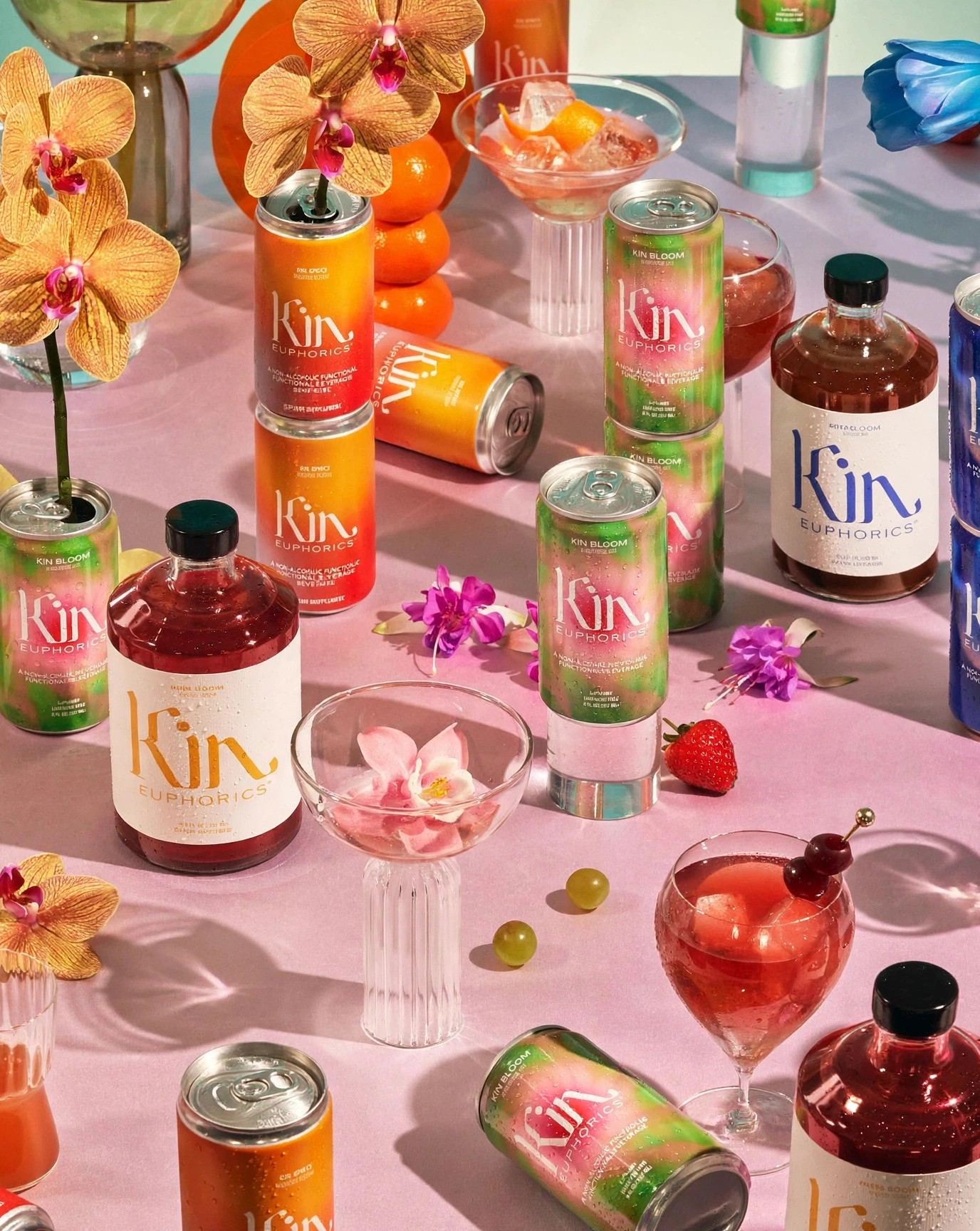
What Kin sells now is nonalcoholic drink organized by clock. Ready to drink cans and made to mix bottles are sold as Tune Up for social hour and Tune Down for night. The brand says the drinks hold adaptogens, nootropics and botanics, with exact contents printed on each product page and label.
What pharmacology readers notice first is format as dose control. Batchelor did not aim to mimic alcohol flavor by flavor. She wanted what she calls flavors with no prior model, held to a tight set of hero formulas. From a measurement view that limit helps. Fewer formulas mean fewer supply chains to audit, and each label has to carry more of the proof.
Kin Spritz prints bitter orange, ginger and hibiscus with Rhodiola Rosea and 5 HTP, and claims gentle caffeine, so we ask for milligrams and form. Walk us through that can from raw material to finished label, with batch records and doses as you hold them today.
Thanks for having me here. The ritual itself holds something great, and that was the start point. I started blending herbs I liked into tonics that lifted mood without weighing on mind or body. I had read Ayurveda, and I was pulled toward plants linked with balance at separate hours of the day.
At home it began as a playful test. Little jars, dried herbs, hot water, sip and revise. Those first Kin blends were rough and could not stand on a store shelf now, yet they held the idea of adaptogenic plants. I wanted a path for people to find ease and company through drinks taken together and shared interests.
What stayed was the frame. One dose is mixed for lift during social hour, one dose is mixed for rest at night. The components shifted as we grasped stability and serving size and taste, and work with nutraceutical firms remade the method entirely, yet the daily rhythm remained. Made for the moments we share still shapes how I read it.
You switched the website on December 5th 2018, after a year with a nutraceutical firm fitting functionals into a small format. What made that small format so hard to dose, dissolve and keep stable.
I did not grasp how hard it would be to carry this out to the world. At home you can brew an extract that tastes good for a single night. To sell it, you need matching taste across thousands of units, with steady shelf life and a label that declares contents.
One partner stayed a year with us placing functionals in that small pack. Botanical extracts run strong in flavor and color. Bitter orange, ginger, hibiscus, matcha, Reishi mushroom, each arrives with its own pH and solubility and sediment. When adaptogens and nootropics and botanics share an 8 fl oz can or a 16.9 fl oz bottle concentrate, fill weight and blend uniformity and flavor must be managed together.
We studied extract ratios and carriers, how a powder moves, how an oil spreads, how botanical source caffeine acts beside acids. The home approach cannot scale. Each incoming lot needs specifications and a finished batch record that maps what entered where.
You grew up in Saudi Arabia where your father brewed beer and moonshine for expat house parties, then you studied Ayurveda and mixed extracts in a Lower East Side kitchen. What carried over from that kitchen into the first commercial batch in method, plant and measure.
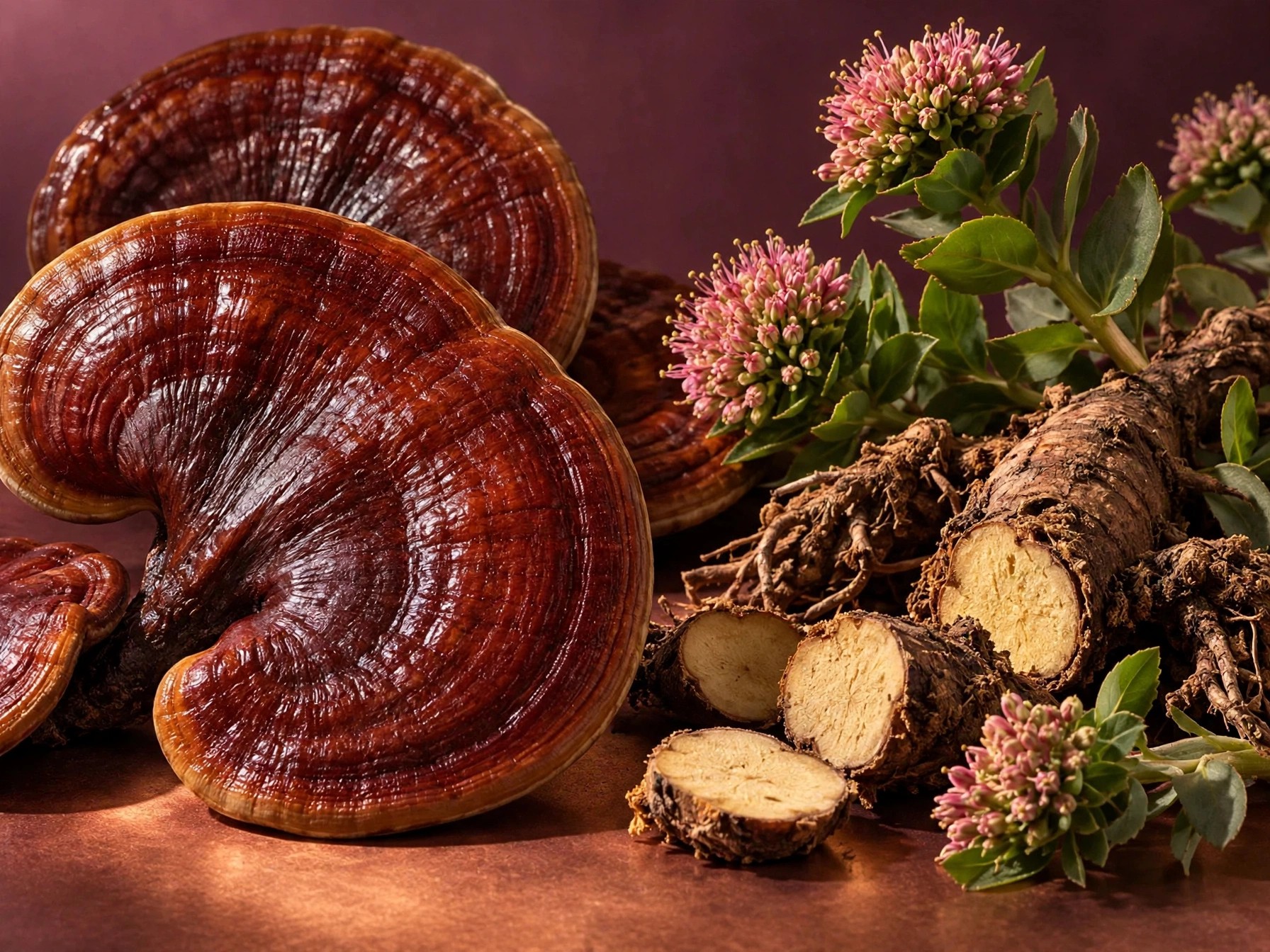
The kitchen phase used whatever dried material I could buy and steep. At commercial scale, drying and extraction fix flavor and the paper trail. A supplier dries herb or mushroom to target moisture, grinds it, then pulls with water, alcohol, or a blend, then concentrates or spray dries to powder or holds it as liquid.
That change alters all of it. The hibiscus water extract in Kin Spritz absorbs unlike a root powder. Rhodiola Rosea comes in as an extract tied to its own taste and specification. Reishi mushroom for Dream Light comes with its own storage needs. Bitter orange and ginger read on top in tasting, while below you manage how each extract dissolves in a sparkling base or in a 2 fl oz serving over ice with a mixer.
We also left open jars for sealed blend tanks with lot tracking. Every delivery bears a lot number plus a supplier certificate of analysis, and we log which lots entered which finished batch. That log lets us answer where a botanical in a given run came from exactly.
High Rhode is your hero made to mix bottle, poured as 2 fl oz over ice with a mixer for social hour, so we read it as dose per pour. Dream Light is its night counterpart with Reishi mushroom, melatonin and L tryptophan, poured warm or over ice, so we ask how much survives the pour. How do those two concentrates differ in the plant by part used, extract ratio and final milligrams.
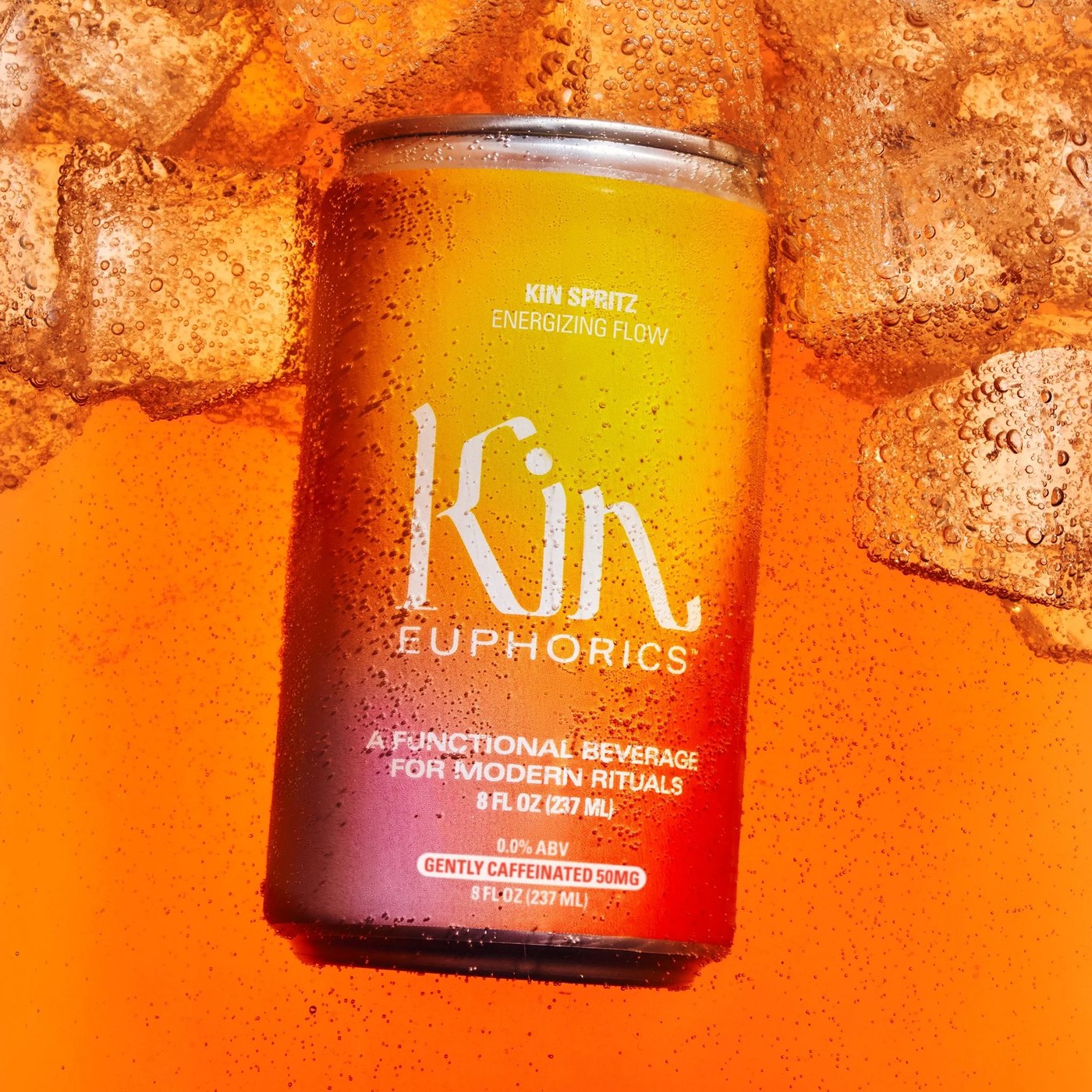
Kin Spritz remains our first social tonic, and it holds the highest review count in the ready to drink set. It is a sparkling 8 fl oz can, nonalcoholic and softly caffeinated. Taste opens with bitter orange, ginger and hibiscus. The label also names Rhodiola Rosea, 5-HTP and other botanics, and exact contents sit on the product page and label.
On the field side, citrus peel, ginger root and hibiscus calyx each begin with a grower and a harvest date. They are dried, then pulled or juiced into a form that can meter evenly in drink. Rhodiola Rosea arrives as an extract built to specification. 5-HTP is a defined component with its own specification and test. Each lot comes with documents, and our partners verify identity and screen for heavy metals and microbes during release.
In the plant, concentrate is blended, carbonated, canned and coded by batch. The can bears the Supplement Facts or Nutrition Facts panel as applicable, plus the other ingredients line, caffeine disclosure and serving guidance. I ask buyers to check the label received for allergens, warnings, ingredients, caffeine and serving guidance, since the label in hand governs for that lot.
Your early formulas kept the spirit of adaptogenic botanicals but would not sit on shelves today under current testing and stability rules. When you moved to commercial production, what changed in drying, extraction and blending that altered potency or shelf life.
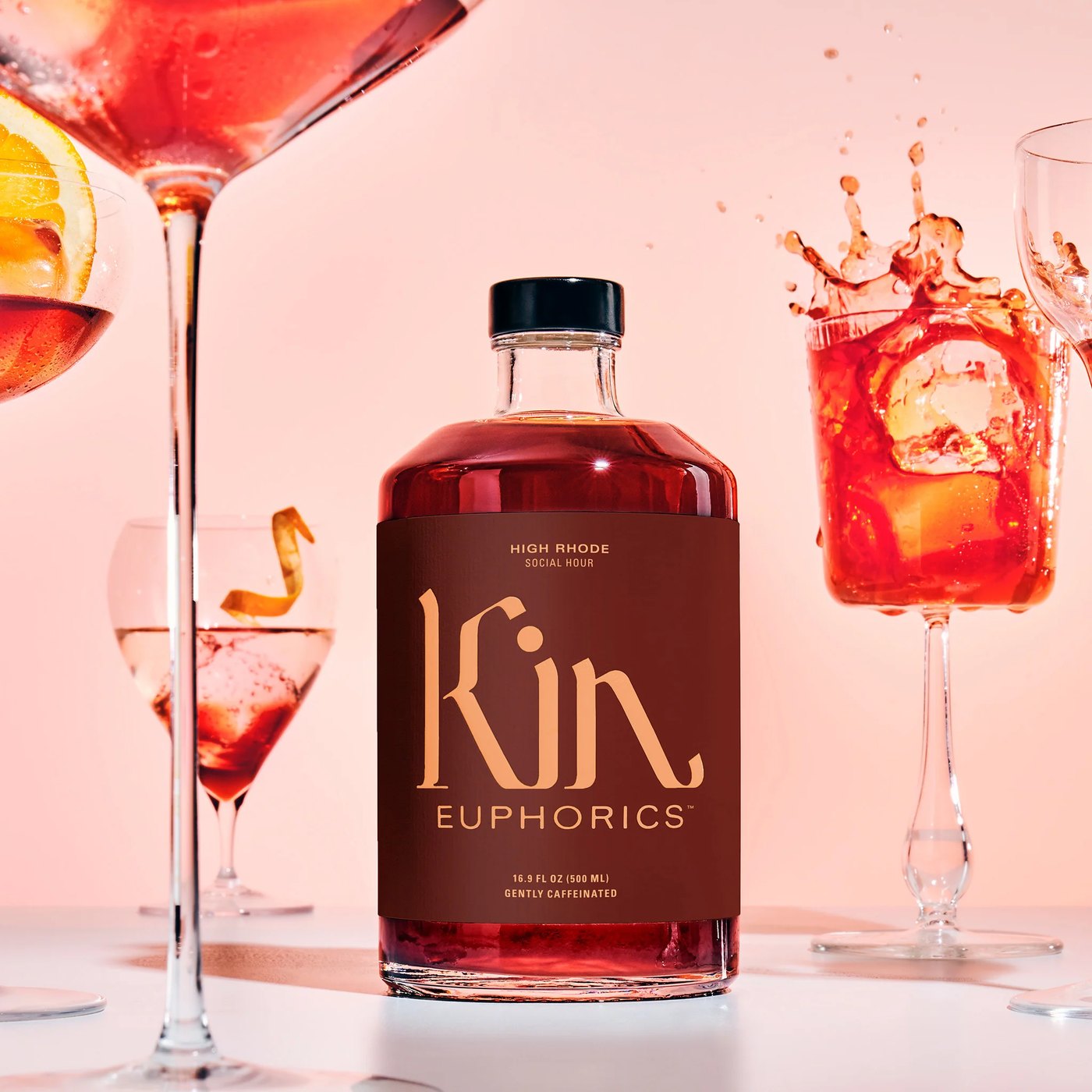
Much can be said for landing one hero SKU, gathering a loyal base around that item, and High Rhode is that for our Tune Up hour. It is a 16.9 fl oz made to mix bottle, which means the serving math matters more than the front panel. You blend 2 fl oz over ice with a mixer and take it as a mocktail for social hour. Dream Light is the Tune Down bottle, nonalcoholic and free of caffeine, blended and taken for a night ritual.
In the plant, both are concentrates, so evenness counts more than in a ready to drink can. A small slip in concentrate turns into a larger slip in glass. Blend order, heat and duration are fixed so powders fully clear and flavor holds steady from first bottle to last. High Rhode builds around social hour botanicals and nootropic components that shift by formula. Dream Light builds around Reishi mushroom, melatonin and L-tryptophan, each calling for exact weighing and checks.
We do not encapsulate. We record liquid fill weight, cap torque, seal and code. Then retain samples are kept by batch so later queries on taste or label match can be revisited.
I wanted to build a way for people to find bliss and connection over shared drinks and interests.
Jen Batchelor
You have said you went straight to the dreamers for investment and rejected just as much as you brought in, which raises questions on oversight and standards. How does that choice show up in sourcing and testing decisions, in suppliers kept or refused.
We went directly to the dreamers. For as much funding as we have taken in, we have turned away an equal amount. I wanted to build something with no prior model, not direct alcohol replicas, and I did not wish to swap conscious connection and efficacy for scale or marketing hype.
That stance appears in tempo. We declined steady line extensions for hype. We kept to Tune Up High Rhode and Kin Spritz and Tune Down Dream Light, with new ready to drink added with care. Fewer items let us remain with the same growers and extract producers longer, study their crop variation, and hold specifications stable.
It also appears in refusals. We refuse drinks that burden mind or body, by our definition, and we refuse off mission money that arrives opportunistically. That is one of the only reasons for me to scale, to keep broadcasting that message and to hold the standard. I advise people to move at their own pace and celebrate in a manner that feels authentic to you. The same rule fits sourcing. Remain with what you can verify.
You state All bliss, no booze and drink for every hour, and you refuse the phrase clean unless it means something, which we respect as label discipline. What does your label prove today, and what paperwork can a buyer ask for to verify identity and amount.
All bliss, no booze condenses our aim for mood and company without alcohol or hangover. Rise wisely and Made for the moments we share tie each dose to its hour. Those phrases state intent. What the label states is tighter and more practical to dose.
The label gives product name, serving size, contents per serving, other ingredients, caffeine presence where relevant, plus allergen and warning statements. For Kin Spritz, it gives bitter orange, ginger and hibiscus character with Rhodiola Rosea, 5-HTP and botanics. For High Rhode and Dream Light, it gives adaptogens, nootropics and botanics for their hours, with Reishi mushroom, melatonin and L-tryptophan shown on Dream Light.
A buyer may request the lot code on can or bottle, the specification for a named extract, and whether identity, heavy metals, microbes and caffeine were checked for that batch. I remain committed to this. I am here to see it completed. If we cannot identify the grower for a given lot now, we state that and outline what proof would require.
Where in the chain are you most confident today, and where is it still unclear from field to capsule, or in your case from field to can.
I place most trust in flavor and format checks at the finished goods stage. Our nutraceutical partners work to a formula, a blend record and a fill record. We hold the batch code, the fill weight, and what the label declares for that run. That segment can be traced.
The center holds steady while we keep the hero formulas. Extract producers supply lot level detail, and we can track a delivery from intake to blend tank to finished batch. That is the benefit of fewer formulas.
The field still holds opacity. A botanical can move through collector, dryer and extractor before arrival with us. We may hold country and extractor plus a certificate, but not each time the named farm and harvest lot for every part. Harvests shift by season. Suppliers rotate. To close the gap we would need farm level lot identity kept through drying and extraction and linked back to our batch, plus testing by lot made public. That needs time and volume, and it is the task ahead.
If a careful buyer keeps two Kin products on the shelf for a year, how should they store, mix and read them so the label still matches the pour.
Keep it plain and use the label received. Hold cans and bottles cool and away from light. Chill Kin Spritz and take it sparkling from the can for social hour, as directed. Agitate or stir concentrates softly before dosing, then pour the listed serving. High Rhode is 2 fl oz over ice with a mixer as a mocktail, so potency depends on the measure and the mixer used. Dream Light may be poured warm or over ice for a night ritual.
Read the full label with every restock. Look at serving size, the caffeine line for Tune Up items, the non caffeinated note for Dream Light, and the other ingredients line if the household has sensitivities. Save the lot code should any question arise. No, I want to make iconic flavors. I want to make something that never existed before. That promise only stands if pour matches pledge, and the label is how we hold that pact.
Closing note from the desk
What remains after this talk is the milligram view of a tight shelf. Fewer formulas, extended runs with steady partners, and labels that shoulder the detail. The sourcing account stays open, and she does not present it as closed. Farm level identity for each botanical lot is still the missing sheet.
Kin aimed to give mood and company without alcohol, in drinks assigned to hours of the day. Read in reverse, that calls for growers and dryers and extract makers, then blend tanks and batch codes, then a can or bottle that lists contents. Whether the price is justified will appear in documents, not adjectives.
Product spotlight
Kin Spritz is a ready to drink sparkling can offered at 57 dollars for 12 cans and 90 dollars for 24 cans, with 8 count at 39 dollars. The label names bitter orange, ginger and hibiscus with Rhodiola Rosea, 5-HTP and botanics, and records gentle caffeine. Chill and take from the can for social hour.
High Rhode is a 16.9 fl oz made to mix bottle offered at 39 dollars for one bottle. The label lists adaptogens, nootropics and botanics for social hour. Pour 2 fl oz over ice with your chosen mixer and take as a mocktail, keeping the bottle as the label directs.

Hailey Carson
Hailey produces the Half Life interviews: the reading, the question lists, the follow-ups. She asks every founder for the study behind the claim and, more often than you would expect, gets the PDF the same afternoon.
More from Hailey Carson →