- Rosemary oil tracked 2% minoxidil on hair count over six months in trials of 100 and 60 people.
- A 90-day study of 90 people linked rosemary-lavender oil to 57.73% faster growth than control.
- Peptide results, oral minoxidil ranges and PRP signals still rest on small samples or consensus.
57.73% faster growth is the headline number from a 90-day test of rosemary-lavender oil against control, reported before 10 September 2026. Two older trials set rosemary beside minoxidil 2%, while later work examined peptides, low dose oral minoxidil and regenerative care. The picture narrowed around the June 2026 guide and that 90 day result.
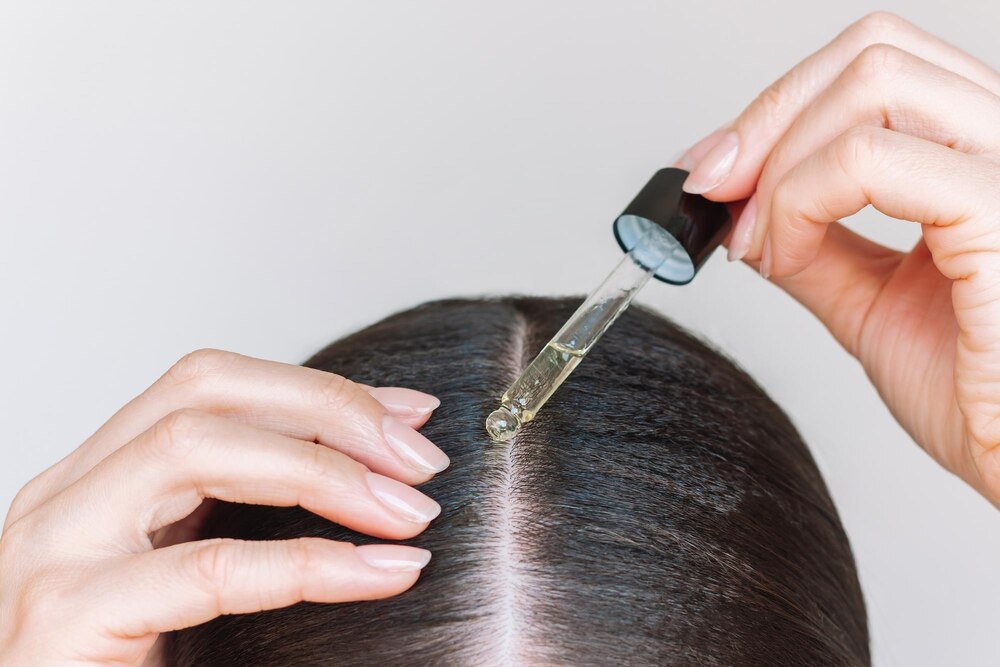
Panahi and coworkers assigned 100 people with androgenetic alopecia to rosemary oil or 2% minoxidil for six months in 2015. Hair counts rose significantly from baseline in each arm, with no significant gap between arms. Itch affected 44.4% of the minoxidil group compared with 15% of the rosemary group, and dandruff affected 32.2% compared with 7.5%.
Nasirian and coworkers assigned 60 participants to 2% rosemary oil or 2% minoxidil for 24 weeks in 2020. Counts grew 10% with rosemary and 13% with minoxidil, with p equals 0.12. The overlap is notable, and the comparator is limited. Both trials tested 2% minoxidil rather than the stronger 5% strength used by many adults, so similarity does not establish similarity to present standard dosing.
The newest rosemary trial tests the plant blended with lavender against a control arm. Patel and coworkers assigned 90 participants in 2025 to rosemary-lavender oil, a peptide preparation or control for 90 days. Growth rate in the rosemary-lavender arm was 57.73% higher than control at p less than 0.0001. Thickness in the same arm was 68.70% higher than control and density was about 32% higher, while shedding declined by more than 40%.
Cell and enzyme work suggests one candidate mechanism. Murata and coworkers reported in 2013 that rosemary leaf extract blocked 5-alpha reductase by 82.4% at 200 ug per mL and 94.6% at 500 ug per mL in vitro. Finasteride blocked 81.9% in that assay. Activity in glass gives no forecast of absorption or effect on skin.
Peptides remain earlier in the evidence sequence. A phase 2A trial of PP405, a peptide that activates hair follicle stem cells, found statistically significant regrowth at eight weeks in 78 patients. A telogen effluvium trial enrolled 45 subjects aged 18 to 45 years in three groups of 15 for 90 days, testing Capilia longa combinations, cytokine and peptide combinations, and redensyl with aminexil at 2 mL once daily. Trials here are small, follow up is brief and formulas keep shifting.
Low dose oral minoxidil is moving from clinic habit toward agreed guidance. An international consensus on starting and monitoring earned fourth place as a poster at the 2024 American Academy of Dermatology Annual Meeting. It published daily ranges of 0.625 to 2.5 mg for adolescent females, 0.625 to 5 mg for adult females, and 1.25 to 5 mg for adolescent and adult males. Benefit usually shows up between month 3 and month 6. The document reflects expert consensus because larger trials are limited. A meta analysis reports platelet rich plasma lifted hair count and density over controls. “Regenerative therapies like PRP now shape how we treat early hair loss, since they use the body’s own healing signals,” said Dr. Lindsay Bordone, MD, FAAD, dermatologist at Columbia University and the American Academy of Dermatology.
For a slow routine, the tradeoff is easy to see. Rosemary demands daily use and patience, with less itch in these trials but no proof gains persist after stopping. It remains unclear if store oils equal standardized preparations or equal minoxidil 5 percent over 12 months.
Look for bigger trials using standard 5 percent dosing, stated peptide doses and longer follow up.

Katherine Warren
Katherine edits the news desk and the monographs at Half Life. She keeps a spreadsheet of every dose she has seen on a label beside the dose used in the trial, and the gap between the two columns is usually the story.
More from Katherine Warren →